Please click on any of the above topics, or look in the dropdown sections for more information on Aldabra, and other tortoises.
Information On Tortoise Body
Is It A Turtle?
This is one of the most popular questions that we get asked about our Aldabras at shows where they are being displayed to the public. The answer is No, although the Americans like to class everything as a turtle, particularly thanks to the Teenage Mutant Ninja Turtle phenomenon, and a tortoise can sometimes be known as a Land Turtle. However, ours are a breed of tortoise called The Aldabra Giant Tortoise, from an island off the East coast of Africa.
A tortoise can be called a turtle but a turtle is never a tortoise.
The basic UK rule is that tortoises live on the land and turtles live in the sea, whilst terrapins span a bit of both but stick with freshwater rather than sea water.
Tortoises also tend to be more domed shaped, in the shell, and turtles are flatter, and smoother, to make them more streamlined in the water. Also, they do not have head and leg cavities like tortoises do, as they would make swimming so much harder, due to resistance, and they do not need to pull limbs back into their shell. Both tortoises and turtles come in many different patterns and colours, depending on what they need to hide from and how hot their original environment is.
After the meteor hit, that killed the dinosaurs and most of the worlds animal population, 66 million years ago, some of the tortoises made the decision to enter the sea in an effort to survive, slowly and finally evolving into turtles. It would not have happened over night but at this stage tortoises and turtles shared an ancestor, as scientist know that all testudinidae tortoises alive today descend from some of the animals who went to live in the sea and not the ones who remained on the land, who went extinct. There were numerous species of tortoises that made this adaptation, into the sea, but not all of them thrived for generations and some went extinct, including species who tried giving birth to live young in the sea. Only the most successful aspects of these adaptations were passed down through the genes of future generations.
This evolution took many years, and above the surface, of the sea, the land and atmosphere began to finally clear and plants and vegetation once more began to grow again, so the tortoises took the decision to come back out of the water and live on the land permanently. This happened in about 55 millions of way, way, way, distant years past and again it would not have been a speedy process, they would have needed to make body adaptations to be able to survive permanently on the land. They are most likely to have been smaller species, not something like a large leatherback turtle who made this choice. They are also more likely to have been species that lived in rivers, were there was more protection, shade and plant food growing on a river bank, rather than coming out of the sea onto a desolate beach where they would have been much more vulnerable and further away from food and shelter. They would not have made the effort to negotiate a path all of the way across the wide beach to find foliage to eat and then haul themselves the long way back to the sea every day, that would not have been productive use of their energy or worth the risk of being attacked. They would have been much more likely to come out onto a river bank where they could eat nearby plant and shrubs, bask in the sunshine and then slip back into the water for protection from predators. In this respect they would have been much more like terrapins. It would also explain why modern tortoises need fresh water to drink and cannot survive from drinking seawater.
Scientists know that turtles descend from the animals that came from the land because they need to come to the surface to breathe and ashore to lay eggs, they cannot remain submerged all of their life. It is unclear exactly who the common ancestor was but now turtles rarely come on land and tortoises rarely enter the water.
Is It A Snapping Turtle, I Want To Get One Of Those.
Err... No this is a very large species of tortoise. Snapping turtles are a very specific and rare animal in this country, and for you to have heard of them enough to actively want one. At a minimum, we would expect you to know what they actually looked like, and be aware of their captive needs, and if you are capable of supplying them. Frankly, if you do not know what one does look like, then you need to do much more research before you actually get an animal and kill it through ignorance, of their specialist requirements, because even I know that they do not look anything like an Aldabra, and I have never seen one.
Do Aldabra Tortoises Have Teeth?
No, instead they have a beak at the front of their mouth to pierce their food and hold it in place as a serrated jaw line cuts through the food but they also have a strong bite. Larger Aldabras can easily eat through foods like pumpkin and watermelon, which have very tough outer skins, and crunch through a carrot in one bite. If you get your finger in the way when they are eating, they will accidentally give you a nasty nip, which can go down to the bone and maybe through it if the animal were big enough. This is why we do not allow hand feeding of our animals by the public. It wouldn’t be deliberate but we don’t want any accidents.
In general, a healthy tortoise beak is slightly longer on the top and curved ever so slightly downward over the bottom, rather like scissors or secateurs.. However, depending on their diet they can grow faster than the animal can naturally wear it down and in cases like these the vet has to intervene and file the beak down for them.
If the tortoise will allow you to, you can try filling the excess down with an Emery board nail file. In the case of the large Aldabra we have to use power tools, so prevention is definitely better than cure.
An overgrown or deformed beak can directly impact the animals ability to eat, and therefore its health. The beak should not be crooked and the mouth should never be held open for extended periods. The feeding of hard foods like pieces of carrot or tough to shred foods like hay are a good natural method of helping to keep the beak growth under control.
Scattering pieces of cuttlebone, also known as cuttlefish, in their pen is a good source of calcium intake when they chew on them and it helps to wear their teeth down as well. Cuttle bone can be got from a pet shop, try looking in the bird section, it is fed to captive birds such as budgies and parrots to helps with stopping their beaks from overgrowing too. Or you can buy it online.
Naturally it comes from the beach, you will sometimes see them as very hard, white, flattish, oval pieces with a rough texture washed up to the water line. It actually comes from Cuttlefish, who naturally die when they are two years old and have bred.
I am not sure about the legality of scavenging from the beach, it is probable if you just took a couple of pieces whilst walking your dog, on a public beach, it would be fine but if you began harvesting it for a business you may need official paperwork of some sort. Make sure that you give the cuttle fish a wash before you feed it to your tortoises to get rid of some of the natural contaminants. It is fine to just leave it in their pen and they can nibble on it whenever they want, they will instinctively seek it out.
Most tortoises do not like being poked and prodded, and a healthy tortoise will determinedly resist you from opening its mouth to look inside or treat it. Even a smaller tortoise will make it very difficult for you. A normal tortoise mouth should be moist, pink and clear inside.


Do They Chew Their Food?
No, they do not have molar teeth to grind their food down. They only have a beak at the front and a finely serrated jaw line. So, when they take a bite, whatever they have in their mouth gets swallowed down whole. It must be quite uncomfortable, imagine yourself taking a bite of an apple and swallowing it straight down without chewing first!

Treat time- they only get watermelon and apples as a special treat
How Much Do They Eat?
It is difficult to say exactly how much an Aldabra tortoise eats in a day because they are a grazing animal. When they are let out of their house, in a morning, they go off foraging, helping themselves to as much as they want. At a rough guesstimate Samson, our biggest tortoise, can probably munch his way through 4 or 5 carrier bags of grass and weeds, on a nice day. In spring, when the grass is fresh and new, they will eat more. He does spend several hours just eating!
Over winter when they cannot get out to graze, they usually get their food on a large plastering tray, to stop it being scattered around the room and contaminated. Some of the tortoises like their dried graze so much that they will even lick the bowl clean, literally their little pink tongues are out dabbing at every last blade of grass.
One common mistake owners, and keepers, make is to dump a pile of food conveniently in front of them and then refill and refill, with the idea that its a big tortoise it must have a big appetite and want to eat all day. The problem with that is that the tortoise is gaining weight but not getting any exercise. If you sat in a chair and ate five, full portion, meals a day for a month, you would put on weight too but with not moving around you would not be converting that food into muscle mass, which is what they need to haul their heavy bodies around.
It is particularly important that the youngsters, of any species of tortoise, not just Aldabra, are made to move around and forage for food, it helps build their muscles and coordination. The will have a much better life if they develop properly, rather than us trying to correct and improve their health later in life. They have plenty of time to grow as they get older, do not rush them because you want a giant. A proper healthy foundation is the best thing that you, as a responsible owner, can provide for your young tortoise.
On Aldabra, the temperature is often too hot for them to do much other than hide from the sun for a lot of the day, so, on occasion, on their home Atoll, an Aldabra tortoise can spend up to 18 hours a day just sleeping, when it is exceptionally warm. However, most days in the wild, they are up with the sun eating early in the morning then dozing around mid day before grazing again in the evening before it gets dark. This means that when they are awake they need to be moving around and eating, leave them to make up their own mind how much they want to feed on but make them work for it, it stimulates their mind as well as body. A UK Aldabra should not be sleeping for so long, if they are you need to alter their husbandry conditions and lower the temperature in their housing.
The tropical rain on Aldabra can change the landscape within just a few hours, the tortoises have been waiting for this to arrive and refresh the foliage so it will grow once more. As a result they will eagerly eat their fill, after potentially months of meagre rations and fasting, hence them being able to sit and happily eat for several hours constantly. Aldabras in the wild, on Aldabra, consume 26 million lbs or 11.8 million kg of plant matter each year between them.
Why Do They Develop Lumpy Or Pyramiding Shells?
Lumpy or pyramiding shells, also known as Metabolic Bone Disease (MBD) are associated with excess growth, is quite common in captive tortoises and is caused by incorrect husbandry. It is caused when their diet has provided too much protein and they have been overfed and not had enough fibre, calcium and mineral supplements. A high protein diet can lead to liver problems, which are incurable.
- In captivity tortoises need extra calcium, vitamins and UVB light to simulate natural conditions they would find in the wild. UK soil composition and natural light spectrum is very different from the Aldabra Atoll and the area of the Indian Ocean they come from. So, we need to give them an appropriate diet with supplements and light replacement levels to avoid this Metabolic Bone Disease forming, which can cause softening and malformation of bones and shell.
- Diet and lifestyle changes may improve the condition slightly, in the future, but it is a very slow process and although it may become less noticeable as the animal grows, it is generally permanent.
- Feed your Aldabra once a day, or better every other day, the quality of food we are giving them in captivity is much better than they would naturally get in the wild.
- Skip a day of feeding if a lot of food remains uneaten after 4 hours.
- In good weather, they will eat more on hotter days than in cooler weather.
- Over spring and summer you do not need to feed them, they should be able to find enough food from just grazing their pen. Hunger is good exercise for them.
- Make them forage for treats by scattering it around their pen. Provides both enrichment and stimulation.
- Do not serve it right in front of them on a plate, so they just sit there and eat, without having to work for it. They will just get fat, lazy and bored.
- Grass is not the most nutritious of foods, but that is the type of sustenance that their body is set up for. Aldabra is a harsh place but their nutritional requirements have evolved over many millennia to make the most of it, we cannot think that we know best when we do not. Everyone want to treat their animal once in a while, and that is fine, but they do not need to be fed 12 cauliflowers in a day, think of it as the equivalent of “have a chocolate, not a box full!” Continually eating anything too high in protein will set the animal up for body issues, and an excess of anything too sweet, like too much fruit, will cause digestive issues, you do not want diarrhoea in an animal the size of Samson!
- If you overfeed them, both with quantity and quality of food, it can trigger an out of proportion growth rate which can lead to health problems in the future. This super fast growth can put strain on their metabolism and especially on their bone growth because they cannot taken in enough mineral trace elements, to grow them as strongly as they should be. Aldabras have a long life for a reason, it takes them a long time to grow and mature, do not force this or you will be risking them being subjected to ill health later in life. They will get there but it is best to let them do it in their own time, and not to our schedule, so they will be as healthy as possible.

Do They Drink A Lot?
Despite being surrounded by miles and miles of water in the form of the Indian Ocean, there is very limited freshwater on their island that they can actually drink. This collects in pools after the rain, being near the equator monsoon season is between November and March. So for several months of the year the tortoises are unable to drink and are forced to obtain most of their moisture from their food. A quarter of their weight is also taken up by stored fluids, in their body, for such occasions.
Aldabra tortoises have actually evolved the ability to drink through their noses, as a direct result of there being such a water shortage. They have to make the most of access to every vital drop. They have very elaborate nasal passages, which form a deeply ascending loop before entering the throat. It also has a large fleshy flap, made of tissue, near the opening to the olfactory recess, directing forwards. Its purpose is to block the entrance to its lungs, to stop water from going down there, when it drinks through its nose.
The 19th Century sailing ships would store a number of them in the hold of the ship and when the crews ran out of water they would drink the urine and fluids stored in the water pouches around the base of the tortoises neck as emergency rations.
Tortoises can drink 15% of their body weight, in one sitting. One of the dangers in captivity, where we tend to have water available to tortoises at all times, is that they can gorge on it making themselves ill. Too much water available can cause water retention, they get into the mindset that they must drink it all up before the dry season arrives but it never does because we keep refilling the bowl for them!
Like too much food, too much water is bad for them, they were designed to fast through the dry season which lasts for several months. That does not mean that they should be denied all water. Just don't give them a big bowl of water, every day. Also move it around their pen, make them look for it as a form of enrichment.
When our big tortoise Samson, has a drink he swallows once approximately every 9 seconds and can spend several minutes drinking, so he takes on a lot of water at one sitting. You will often see them blow air out of their nose to stimulate the water, to make it ripple, and cause aromas to stir, to sense if the water is OK to drink before they take a sip.
Aldabra tortoises don't sweat so there needs to be plenty of shade available for them during hot times of year. Shade is just as important to reptiles, to help them thermoregulate as sunshine and hat is to warm them up. Normally they would like to find a mud wallow, to hide in, to cool themselves down. If you leave a hose pipe accidentally running then they will create their own mud wallow and make a real mess of your garden in the process.
Tortoises like to got to the toilet in water, they find it comforting to know that there is fresh water available to take on board. Naturally it encourages them to go, as they know they wont end up getting dehydrated, once they have passed their used fluids from their systems.

Why Do They Sometimes Lift Their Back End Up When It Is Raining?
You will sometimes notice that they will raise their back end higher than their head during a rain shower. This is an interesting design evolution involving their scutes and shell shape. It causes the water to naturally run along the Suture lines between the scutes and off their shell, channelling it, to dripping down in front of them, to form a pool for them to drink from. This could be lifesaving in times of drought.
The Digestive System
Tortoises have the same digestive organs as most other vertebrates, however they have adapted to cope with conditions where food and water conservation is necessary, as replenishment is scarce at certain times of the year.
Aldabra tortoises have a long digestive tract typical of vegetarian species but they have unusual digestive processes and features. They have the ability to extract and assimilate moisture and nutrients from foods, which we would say were dried up and would be of no nutritional use.
Tortoises achieve this by a means known as a "hindgut system" which is a bit like having two digestive tracts. The second reabsorbs any moisture from waste products already produced by the first so nothing is wasted.
Arid dessert tortoises such as the Sulcata can also split up their urinary waste in their kidneys, allowing them to store valuable water in their bladder and only expelling the waste product in the form of white insoluble uric acid crystals. This has been described as having a similar look to toothpaste or cottage cheese when passed.
Aldabras do drink a lot, at times, but they also pass a lot of liquid urine and copious amounts of poo but it is good for the roses!.
How Long Does Food Take To Process Through An Aldabra In The Wild?
In the wild, in a 20 to 30kg sized Aldabra tortoise, it can take days to weeks for the digestive process to be completed and poo to pass from the body. In the wet season, which is in January, they average 3 to 9 days. During the dry season,which is in June, it takes a little longer at 19 to 41 days.
Late dry season, in September, has the broadest time range between 11 to 90 days.
many factors will affect the process:
-
What the animals has eaten, some foods take longer to digest than others. Grasses pass through quicker than shrub and drier, woodier, browse.
-
How much water there is available, lack of drinking water will slow the process both to get the food down in the first place but the body will try and remove as much liquid and nutrients as possible from the food before expelling it from the body.
-
The time of year, if it is very hot then the tortoise will shut down or slow body functions down to preserve water and go into a type of stasis to allow it to survive longer, until more favourable temperatures return.
-
The condition of the tortoise, a poorly tortoise will take longer to digest its food because illness impacts the condition and levels of gut bacteria the animal has to aid digestion. Lower numbers of bacteria mean the process takes longer.
-
Some seeds and stones from island fruits take longer to pass through the digestive system and this helps to prepare them to germinate. Some species of plant on Aldabra can only grow from a seed that has successfully passed through a tortoises gut, and they will come out cleaner than when they went in!
Do Aldabra Have An Effective Digestive System?
How much goodness and nutrients an animal gets from its food, before expelling the waste from its body, is called Gross Assimilation Efficiency For Defecation. In Aldabra tortoises this can vary and be affected by what they have been eating.
Food can be very scarce on their home Atoll and their bodies have evolved to break the food down to get as much benefit from it as possible, however, this efficiency can sometimes be as little as 50%. in these cases you will often see in their dung that there are still fully intact leaves and vegetation. This is often because it is very poor quality food that they are eating so there is little sustenance to extract. Passing through the gut will take out what is readily available but to break it down further would need more water and fluid in the gut. With limited supplies of water available it is not always worth them using their vital emergency supplies when the benefits do not outweigh the cost for them to digest it, basically it is not worth their effort to try and digest it further, so they just get rid of it.
Do They Have A Tail?
Yes, it is under the back, bottom edge, of their shell, protected by the Supracaudal Scute and is usually tucked to the side so that it does not impede movement or so that it is not accidentally damaged. The males have a lot longer tail than the females and on adults it will usually reach their hind legs, they can tuck it either side but they usually have a preference. Their Testes are located internally. A females tail is usually less than half way from midline of her shell to the base of her hind leg.
The tail has strong muscles and both males and females have just one multi-purpose opening, the Cloaca, also called a Vent, which is used for defecation, urination, mating and for the females to lay eggs. If they start wagging their tail from side to side, it is usually an indication that they are about to go to the toilet. Tortoises will either stand up or just raise their back legs, to make room for their tail to hang down, when going to the toilet. They are able to multi task and will quite often still be eating at the same time!
Generally a female Cloaca will be nearer the base, of her tail (closer to the shell) and males nearer the tip end of his tail. Aldabra adult males have tails around (15 inches) 38cm long, Scientists have calculated this to be 39% of a straight carapace length of (38 inches) 96cm. An adult female tail is usually less than a third as long.
How Much Poo Can They Produce?
Apparently, in the wild, a 135kg tortoise may produce up to and even more than 50, five inch faeces in a day together with a large volume of urine.
From our experiences, we do know that in summer we spend an awful lot of time cleaning up after them!
Why Do They Eat Poo?
Many tortoises, and other animals, routinely eat their own, and other animals, droppings, this is probably to extract more nutrients, by digesting it again, or to get to the healthy microbes in it if they have an imbalance in their own gut bacteria.
Eating the poo itself will not cause the tortoise harm, it just seems disgusting. The problem is if your cat or dog etc has had worming treatment, or other medicine, this can be poisonous to tortoises, if eaten. So, you should always promptly clean up faeces from the tortoise pen. It is good practice to prevent your other animals from getting in there anyway.
Do Aldabra Tortoises Break Wind?
Yes. Just like with cows, eating large amounts of grass can cause excessive gaseous production as it is digested, which passes from their body via their bottom.

This little guy did not produce this, one of our larger Aldabra juvenilles did. If this was from Samson there would probably be three times more!
A healthy Sulcata's poo is very similar looking and it would probably produce this much, each time, for a 15 year old animal.
Why Do They Have A Long Neck?
The long neck and ability to raise themselves higher off the ground allows them to reach low hanging browse from trees and shrubs, thus increasing the variety of their diet., they have access to. Some sub species of Giant Galapagos Tortoises have developed their shells differently to make this easier to achieve. Instead of the usual dome shaped shell they have raised shell above their neck making them look more “saddle” shaped to allow greater movement of the head. There is also a Saddleback shaped Aldabra but the shell shape is not as pronounced as with the Galapagos breed.
Most tortoises have 5 vertebra and they fold back in a S shape. However, Aldabra have longer necks so they have 8 Vertebra to support the extra length. When they retract their heads into their shells, it is by a vertical Z fold rather than the usual S shape. Generally when they are super relaxed, they sleep with their head and neck right out, at full extension, either resting on the floor or the shell of a smaller animal.
Some Aldabra have developed the skill that they can stand on their hind legs and reach out, even higher, for succulent leaves and shoots that are more than 3 feet above ground level. It is an impressive sight to behold. This is a perilous acrobatic feat, for them, as they risk death if they tip over onto their back because they are unable to right themselves and will asphyxiate with the weight of their insides crushing down on their lungs.
Aldabra Tortoises have a shorter, thicker and less mobile necks than their Galapagos counterparts. The saddleback Galapagos Tortoises in particular have a long reach with their neck, so that they can stretch up for browse and gain access to more food resources. They also use they necks for display and fighting other males at breeding time, which is not something the Aldabra tortoise does.
Do They Have Ears?
Tortoises have no external ears, they are beneath sealed flaps or smooth scales, usually circular shaped, and a darker grey in the case of Aldabras, which are located behind the tortoises eyes, towards the rear of the head. Their hearing is quite good.

The ears are that little black disk area, at the end of the smooth neck skin, about a horizonal line back from his tongue in the picture.
This picture was taken by an interested, German, gentleman who had come over to Swaton Egg Throwing Competition, a couple of years ago, with his national team.
Unsurprisingly, he won a special mention in the photography awards competion for this brilliant picture of Zeus, about to eat a tomato. (I don't think he won the egg throwing though!)
Do They Have A Good Sense Of Smell?
Yes, a tortoises primary sense is smell and not sight. They can detect smells that human noses cannot, in particular the smell of females. They will sniff at anything new that comes across their path. Our big female Bonnie can sniff out a banana, even if you have hidden it from view. Besides finding food their sense of smell can help them decide if a spot is good for digging a nest, or if water is fit to drink.
Their nostrils are called Nares and they breathe through them, but they also scent through them. They smell by pumping their throat to move air past their Jacobsens Organ, which is the scent organ most reptiles use.
A tortoises nose should always be clear. A runny nose is cause for concern. A tortoise who is gasping or has bubbly or thick discharge coming from its mouth or nose may be very ill. It needs to see a vet as soon as possible.
Tortoises rib cages do not move, as this is their hard shell, so they force air in and out of lungs by working front limbs, which can look like they are shrugging their shoulders.
Do They Have Good Eyesight?
Aldabra tortoises have good all round vision, due to having their eyes on the side of their head as opposed to having binocular vision like humans do. It is thought that they use their eyes to catch movement but may have difficulty picking out detail. As they are neither predators nor prey (apart from to humans) they do not need particularly strong eyesight. They eat grasses which are on the floor, or at head height, and close to them so they do not need long sight to find food.
Being Diurnal creatures, Aldabra tortoises are active during the day and settle down as it gets darker, to sleep. This does mean that they do not have good night vision, because they do not need it. It also means the they can be very stubborn at dusk, if you are trying to get them back into their house. So you really need to factor this into your daily care. Most of the time they will put themselves safely back to bed. However, if they have gone exploring new areas and not given themselves enough time for the nightly commute, then they will stay put. It is easy to be caught out, especially on a nice day in winter, when they have popped out for an hour to stretch their legs but the early evenings, and darkness, come quickly then. They can want to go outside on days that you would not expect them to.
If your tortoise is of a size you can easily pick it up, this is not an issue. However, if your tortoise is more substantial then it can be a big problem and this is when their tickle training is an advantage.
Their natural inclination is that they just park up for the night and stay where they are. In the wild they would be perfectly safe both from predators and normal, local, weather patterns. In the UK there are wild animals that could injure them, if they were left out overnight. The weather is also an issue, it is too cold for most of the year to risk leaving them outside without heating.
With repeated use of their tickle training (tapping their shell to steer them where you want them to go), or red ball training (following a red ball on a stick), they begin to trust you, that you will steer them safely back to bed and you need to make sure that you do not break this trust with them. Only lead them on routes that they would be comfortable travelling. Take them down gentle slopes, not shove them helplessly down a set of concrete steps. Regularly keep up the tickle training, and not just use it when there is a problem, if it is normal for them they wont baulk as badly when you really need to put it into practice.
Once it is dark Aldabras are definitely more nervous about moving around, having a powerful torch with you is a real advantage, so that they can follow the light as you stand beside them and shine it just in front of them, leading their way. Do not shine the torch directly at the tortoise, you would not like it if someone did that to you. It will not be a quick process but because of the bond you have built up with them, they will trust you to keep them safe and walk back to their house. If they are not feeling trusting they will just sit there unmoving, which can be very frustrating, especially when it begins to rain!
Tortoises are particularly attracted to reds though and other strong colours, food such as strawberries and tomatoes make good rewards, when trying to train them but many owners say that their tortoise will chase them around the garden when they have red toe polish on! They struggle with blues and darker colours.
A tortoise should have bright and shiny, alert eyes. Dryness of the eyes could indicate that they are dehydrated or be the onset of an illness. Again, excessively wet, runny, weepy eyes could be a sign of infection too, so do not ignore discharge and take your animal to an exotics vet if you are concerned.
Aldabra tortoises do often have weeping eyes, or what looks like foam in the corner of their eyes. It does not mean they are upset or there is anything particularly wrong with them. There are three current thoughts for the reason that this happens. One is that they are like elephants, who produce a type of musk, at breeding time, which runs down their faces, however it can affect both males and females. The second is that it is a way of them cooling down because they are unable to sweat due to the fact that their shell covers so much of their body. The third thought is that it is a way of them getting rid of excess salt and impurities from their system, and is a connection to their ancient turtle ancestry, who do the same thing. It may not have one sole reason, it could be a combination of all three. If it happens with your Aldabra tortoise, do not panic it is perfectly normal. In our experience it is not detrimental to their health and can just be wiped clear with a clean tissue. To stop detritus from getting stuck to it and causing further problems or eye infections.
Injuries to the eyes can cause blindness, so peer visually at your tortoises retinas, for scratches, during your regular maintenance checks. However, unless you know what you are doing, never try to pry a tortoises eyelids open, or shine a strong light directly at the eye.
To protect their eyes while burrowing, tortoises have a third eyelid. Do not be surprised if you can see your tortoises third eyelid at the front corners of their eyes. However, do not be alarmed either if you do not see this eyelid at all, as that is normal too. Sulcata, especially, often have their eyelid closed and it creates a white barrier, making you think they have got cataracts, or something. However it is just a way of keeping the eye protected from dust and heat and they can still see movement through it, to react if there is a predator coming near. If you see that the eyelid is always closed or looks dry, or swollen or unusual, it could mean an eye injury, or that the animal is not feeling well in general and needs to be checked by an expert.
Our Aldabras have been part of a long term eye study with the Vets from The University of Cambridge.
Can Aldabra Tortoises "Hear" Through Their Feet?
The honest answer is, we do not know. In theory, it is possible.
We know that they can sense when it is going to rain but whether that is because of a change in air pressure around them, or the scent that even we can sometimes detect before a thundery downpour or that they can hear rain rumble coming in the distance, we do not know.
The soft scales on their feet and legs are called Scutellae, providing both traction when walking and protection. These scales help with their thermoregulation as they allow them to absorb heat from ground, or water, around them.
It is known that Elephants have 65 audible sounds, that humans can not hear, and they can pick up sounds with their feet, vibrations through the ground known as infrasound can cover many miles. It allows them to hear the rumble of thunder, as it forms rain clouds four up to 150 miles away, meaning they can get a head start heading in the direction of rain and fresh water when Africa is at its driest.
Humans hear at 20-29 hertz. Using infrasound allows tigers to hear at 18 hertz, we can not hear this but can feel it. Blue whales use infrasound to allow communication to pass over great distances through the oceans.
You can see from pictures that Aldabra tortoises have elephantine looking rear feet, round and solid, to support their heavy weight when walking. So, it is very possible that Aldabras are similar and can pick up vibrations but to our knowledge no one has ever proved it.
We have definitely seen silent communication between two Aldabras and so, know they do interact together in a way we cannot hear.
Can They Sense The Weather?
Yes, tortoises have an inbuilt “sensor” in their skull, which allows them to evaluate the weather. They know if it is not going to be a good day and it is more efficient for them to stay in bed and have a “duvet day” or if it is going to be good weather and they should get up early and make the most of it.
They can also tell when there is going to be bad weather, if it is going to rain hard then they will often head back to bed early. For example, the other day Samson was out in his pen and it was lovely sunny weather, he then made the decision to head back to bed. He went straight there, with no deviation or stopping on the way for a snack, or a drink, which was unusual. However, he clearly knew something that we did not because half an hour later we had a thunder storm, complete with lightening and stair rod rain but Samson was tucked up warm and in the dry of his house. This sense may be something that develops with age because several of his younger brethren got very wet!
Why Do Aldabra Tortoises Not Feed At Night?
If temperatures on Aldabra get so high that it can kill them, during the day, the obvious question is why do they not feed at night when it is cooler? Their species have lived on this island, in various colonies, for millennia, there are no natural predators to be afraid of so, you would think they would be safe.
This is true, however, the problem is that Aldabra tortoises do not have good night vision.
We have found that if they are still out at dusk they are very reluctant to move, if they are too big to physically pick them up, or in an inconvenient place for the tractor to lift them. You have to get a powerful torch, shining it just in front of them, and light the way for them to lead the way back to their house and even then they are not happy and it can take a long time. It is mainly the fact that they trust us that we can get them to slowly walk back to bed. Most of the time they will just think that they have their house on their back and just settle down to sleep wherever they are until daylight returns.
They do appear to struggle with dark colours like navy blue. We have a support holding the canopy of the roof up, it has been there for many years and it is painted a navy blue colour, the tortoises never seem to learn to go around it, they regularly bump into it. Their eyesight is definitely geared up for brighter colours like reds yellows and oranges, the colours of daylight.
It would seem that they find it more beneficial to sleep and chill down overnight whilst digesting the food that they have eaten, in the early evening, rather than stumble around being unable to see properly and risk injury or death from an accident. They will begin feeding again, when the sun comes up and do so constantly for several hours before being driven to find shade away from the increasing temperatures of midday heat.
The Muscular System
Tortoises have different muscular systems to most other types of vertebrates, this is mainly due to their spines being rigid. It means that they do not need to flex and twist their backbone, so they do not require those muscles. In contrast they do have very well developed neck muscles, allowing them to stretch out to full extension and retract right back into their shells. They also have well developed leg and tail muscles.
Tortoises, and Aldabras in particular, can bite through some very tough foods so they have strong muscles in their lower mandibles. This is something you will have noticed if you have ever tried to pry open a tortoises mouth when it is reluctant to eat, it is not the easiest thing to achieve.
A healthy tortoise, of any species, will have strong muscles, a weak flaccid tortoise is not feeling well and needs expert treatment. A sick or stressed tortoise will be reluctant to stand and come out of its shell but a healthy animal will stand tall, with their Plastron off the ground, how the animal stands will give you a good idea about how the tortoise is feeling. If it is not making any effort to stand up, when it normally can do so, then it is not feeling well.
An Aldabra that is in good health is a very strong animal, even the babies, and you are never going to win a one on one tug of war against the big guys!
Tortoise muscle contains large amounts of Myoglobin, which resists lactic acid build up and stores lots of oxygen, it is one of the reasons that they can hold their breath for such a long time. When they take a deep breath they can inhale a larger percentage of air than most other vertebrates, their lungs are very large.
What is their respiration rate?
The typical respiration rate is about 20 shallow breaths per minute, which is quite rapid. You can watch the respiration rate by looking at the pulses of muscle in the soft skin of the rear leg area.
Their nostrils work best when their mouth is closed tightly rather than open. Unusually their nares (nostrils) open into the mouth and not the throat like a human nose does.
If you see them making throat motions whilst they are breathing it is usually their way of sampling the air for new and interesting scents.
What Is Their Heart Beat?
A tortoise has one heart, like all other animals. But interestingly this heart has three chambers. Two Atria and a Ventricle composed of three interconnected chambers. The heart is responsible for pumping blood around the body, delivering oxygen and nutrients to the cells, and removing waste products.
Giant tortoises have a resting heartbeat of 6 beats per minute and an average lifespan of 177 years. In contrast mice have a resting heart beat of 240 bpm and a lifespan of just 5 years. Humans average 60 to 70 bpm and live and average of 70 to 80 years. This does show that the lower the heart rate, the longer the life.
On their home Atoll the tortoises are not hunted and they do not hunt anything themselves, so they do not have that stress. They move very little when they are eating, so they do not need a rapid heartbeat. Even when they are climbing a hill, which is probably the most activity they would get, their heartbeat would only be around 25 bpm.
Do Tortoise Have Blood?
Yes, tortoises have blood, even though they are cold blooded reptiles they blood is still red and not blue, and you can see it if they scratch or injure themselves.
Tortoises have no external insulation, such as hair or feathers, and have not got a subcutaneous layer of fat to keep them warm. They are ectothermic animals, which means that their metabolism and blood circulation is not effective enough that they can maintain a constant level of body temperature so, they need to bask under external heat sources, like the sun or thermal lamps or sit on underfloor heating.
Their blood does more than just move oxygen and nutrients around the body to keep them alive. The heart will first pump the blood through the vessels, beneath the domed Carapace, so that it can be warmed to approximately 30c, whilst they are basking and then through the circulation system, within the body. It is used to distribute the heat, like your central heating system at home moves heat to different areas of the house, only with a tortoise it goes to different limbs or organs instead of rooms. This raised temperature encourages feeding, activity and metabolism.
It is difficult to get a blood sample from a tortoise because most of the body is covered in shell. The vet usually tries in the neck cavity or by the rear legs but then they usually pull in and can bend the needle. Some native communities think that tortoise blood has medicinal benefits and that it can cure ailments like anaemia.
If your tortoise is oozing blood, from any orifice, then they have a health issue, which is not normal and could be serious, and they need the attentions of a vet to have it investigated.
What Is An Aldabra Tortoise Body Made Up Of?
43% of an Aldabra Giant Tortoises body mass is composed of bone, and this includes the shell.
38% is soft tissue, this includes the intestines, other organs, as well as muscles, limbs and skin covering with scales and scutes.
12% gut contents both things waiting to be completely digested in the stomach, and waste waiting to be expelled prior to death.
6.6% liquid, which is made up of blood, urine and both stored water in their large fat pads, as well as any recently taken on board fluids, like fresh water or liquid they have absorbed from the plants that they have been eating.
In comparison, scientists studied a large, mainland, herbivore that lives in similar environmental conditions. The African elephant is:
18.6% bone. They are a large animal so they need large bones to support their immense weight as they move around.
11.6% skin. In comparison there is very little skin showing on a tortoise, and it does not qualify for its own category.
51.5% is soft tissue, this includes the intestines, other organs, muscles, limbs and trunk.
16.3% gut contents.
2.0% liquid.
The tortoise has a much higher amount of bone content because of the large shell covering most of its body. Whereas it has very little skin exposed, unlike the elephant.
Liquid content of the tortoise will include blood and also stored water used to keep the animal alive in times of drought and can be up to 25%. Results will depend on the condition of the tortoise autopsied and the time of year, when water is very scarce in the dry season they will be using their on board supplies to live, so hydration will be much lower at the end of the season than at the beginning of it.
In comparison the elephant has much less liquid in its much larger body and as a consequence needs to drink a lot more frequently or die. However, the Aldabra tortoise can live much longer, sometimes many months without water, by rationing the liquid it has stored, stopping growing and hiding away in shade to prevent fluid evaporating from its body in the heat, until the rains return bringing vital freshwater to fully rehydrate them.
How Heavy Are Bits Of Aldabra Tortoises?
Scientists did an autopsy on a 21.65kg Aldabra from Grand Terre and found that its weight composed of:
| weight kg | % body weight | |
| Shell including scutes and attached bone | 5.55 | 30.2 |
| Muscle | 3.95 | 21.5 |
| Internal Organs | 2.8 | 15.2 |
| Other Bones In Body | 1.78 | 9.7 |
| Skin | 1.34 | 2.3 |
| Fat | 0.84 | 4.6 |
| Other Fluid | 0.73 | 4.0 |
| Blood | 0.51 | 2.8 |
| Urine | 0.51 | 2.8 |
| Head | 0.38 | 2.1 |
| Gut Contents | 3.25 |
Where Are Their Kidneys?
Aldabra kidneys, come in a pair and are located about half way down, underneath, the carapace, near their back bone. Kidneys deserve a special mention because they are vulnerable to complete destruction by the use of Antibiotics, especially with repeated doses. More than one course of the same medication within the tortoises lifetime can create serious issues for them. So notes should be kept on any medical treatment for future notation and comparison.
How Many Bones Does A Tortoise Have?
A tortoise has a total of 52 bones in its body, this is fewer than most other animals, and 20 to 30 of those bones are just in its shell, depending on the species. Aldabra Giant Tortoise bones are thin and hollow, containing no marrow, which helps with natural buoyancy and is one of the reasons they are able to float in water despite their immense body size. Smaller tortoises have thicker bones to help survive predators attacking them, but this makes them less buoyant, so they cannot float.
Despite being thin and hollow, Aldabra bones are designed to be weight bearing. and the joints are thicker and more robust. Tortoise bones are flattened and broad, they have a slightly curved shape which helps with the weight distribution of their heavy bodies. They require stability rather than speed and dexterity, compared to animals such as mammals which are narrower boned.
It is important that all captive tortoises, no matter the species, but especially Aldabra and Sulcata, have added calcium and minerals in their diet, to grow and maintain their bones, to be able to securely transport their excessive, weight when they are fully grown.
Do Tortoises Have Claws?
Yes, there are five on the front and four on their back feet. A tortoise walks on its toes like an elephant and this is called Digitigrade. Tortoises have big claws which allows them to be amazing diggers and climbers, they also allow them to grip in order to clamber over rough terrain.
Tortoises need areas of hard substrate in their enclosures, where they frequently walk, in order to wear their claws down naturally. If they do become overgrown then the smaller breeds can be trimmed using dog nail clippers, but with the large species it requires power tools!
Clipping tortoises nails is not something that should be done by an inexperienced person, as it is easy to cut too much off and nick one of the blood vessels, causing a bleed. If you are going to clip nails it is advisable to have paper towels and a silver nitrate pen handy, to quench and stop any blood, before you begin. Cutting less off, and more frequently, is always the better option than cutting too much in one go. Using a rough nail file to rub them down is a preferred first option.
Too much protein in their diet will also cause excessive nail growth. Females can naturally have longer nails on their back feet because it helps with digging their nests out, as they use their rear feet for most of the soil excavation work. Males can sometimes have longer nails on their front feet to help them grip onto the front of a females shell during mating.


An adult Hermann has the same number of claws, just a lot smaller!

Why Do Tortoises Have Scales?
A tortoises skin is usually quite smooth and dry feeling, except at the joints where it wrinkles to allow movement, however, if your tortoise is dehydrated then the skin will feel more wrinkled and loose, especially around the neck and upper arms.
Although they are reptiles, the skin has a type of Pachyderm feel, like elephants and rhinos, which means it is quiet thick and leathery to the touch and almost impervious. The skin around the neck, hips and shoulders is a lot smoother because they have to be able to tuck these aspects deeper into their shell and they want to feel comfortable. There is also the fact that arms and feet will pull into place to cover these vulnerable points, so there does not need to be strong protection there, and lack of thick scales saves space.
This smoother skin is is not robust enough to stand up against the harsh environments tortoises live in. There are a lot of rocks or jagged coral to walk and climb over, not to mention the prickly plants tugging at their skin as they pass by. So, they have evolved scales on their head and legs, both as a method of protection against injury from whatever source but also as a way of regulating their temperature. The scales also offer much more protection against harsh sun and sandstorms, which could flail thinner skin from their frames.
The colour of these scales are usually shades of browns and greys, the colour variations are called Morphs. Colour depends on the species of tortoise, the smaller ones will be looking to blend into their habitat for maximum camouflage against predators, and whereabouts in the world they originate from. Generally the lighter the colour of the tortoise the warmer their country of origin as, it helps to reflect the suns rays away from them, whilst darker skin absorbs the heat better and faster which indicates cooler night temperatures.
The size of the scales will differ to the environment the tortoise naturally calls home. Smaller tortoises tuck close inside their shell at the threat of danger so only the outer edges of their limbs have pronounced scales. Aldabra tortoises are not combative animals so they do not need defence protection and they have no real predators. However, they have thick protection on their forearms and feet for when they are walking over and through sharp and hostile terrain, to prevent their skin being sliced open, and also to help limit evaporation of fluids in the heat. Whereas Sulcata have much more armoured scales, they are formidable to look at, because they are a confrontational species and need to protect themselves as much as possible from attack. From both other Sulcata and other predators on mainland Africa.
As reptiles, tortoises can shed their skin. However, they are not like a snake that will shed their whole skin in one go. You are not going to go into their pen one day and find a perfect skin replica of a tortoise sat there. Instead they flake off in small bits, its like when your sunburn is peeling off, you will usually notice it on the back of their neck or in their shoulder cavity. Do not be alarmed by this, it is natural and no different to our skin peeling off to reveal new growth underneath. However, please do not try to peel the shed skin off the tortoise, it will happen naturally, when ready. If you try to pull it off, you could cause a painful injury that could lead to an infection. If you want to help, pop them in a warm bath for a short while and let them soak, it softens the skin as it rehydrates and makes it easier to shed.
A healthy tortoise will not have sores or open wounds anywhere on its skin. If it does then you need to keep a close eye on them to prevent fly strike, which is when flies lay their eggs on an open wound and you can find it covered in maggots. It is a revolting thing and you need to seek veterinary advice if it does happen, it could kill the tortoise within hours.
There may be marks and scars from older injuries on their bodies, which should be noted in case it becomes a recurring problem. If it keeps getting a cut from clambering over a certain rock, then remove the rock from its environment, there is no need for unnecessary injuries.
Why Have Aldabra Tortoises Grown So Large?
Aldabra Giant Tortoises, and Galapagos Giant Tortoises have grown large due to something known as Island Gigantism. When they first arrived on their new islands they were few in number and there was plenty of food for them so they continued growing, and growing larger over the following generations.
Galapagos were thought to have been a small species of tortoise when they first arrived on their island via a raft of some form and there may well have been a group of them and they have grown and grown. In comparison it is believed that Aldabra were a large breed before they arrived via oceanic drift. They may not have been as large as the biggest males alive now but they would have still been larger than other modern species and again they continued to grow unchallenged, as there were no predators of note and they were top of the food chain.
Mammals do something similar, on an island, only in their case they are usually getting smaller and smaller over the following generations, thanks to limited and more heavily competed for food, and space, on an island. This is called Island Dwarfism, as they have more competition to survive.
Are They Strong?
They are very strong animals they can carry almost 40% of their weight on their back. The larger Aldabras are able to carry the weight of an adult human sitting on their back with no trouble, as they walk along. However, we do not encourage riding the tortoises, they do not go very fast and it is not very comfortable!
The females have to support their own weight and the males weight pressing down on her, as well, when mating. So that can be a good portion of a quarter of a ton male tortoise climbing on her.
Tortoises have four foot drive, and this means that in a one on one, against a large giant, you are always going to loose in a tug of war. If you want them to go somewhere and they do not want to cooperate, you are never going to be successful with physical manipulation alone. They will just turn back to where they were before you heaved, pulled and almost did your back in to move them just a few centimetres. Better and less tiring to try using encouragement and a treat!
How easy it is to move the larger animals also depends greatly on the type of surface they are sitting on.
How Big Do They Get?
Wild male adults typically have a Carapace shell length of 105cm (41 inches) but can grow to 4ft. The females get up to 3ft (91 cm). Tortoises kept in captivity will typically grow quicker, and can get bigger, than their wild counter parts as they have access to more food and it is normally of a better quality than food found in their natural home range. Too much fruit in their diet can cause pyramiding of the shell and over feeding them can cause weak bones and other health issues. it is best to allow them to forage and allow them to eat as much or as little as they require. They can spend many hours eating but they can also spend an awful lot longer sleeping the day away and not getting exercise, so, not using up energy.
In captivity where they can have access to more food, and better quality food, males will grow to be 90-320kg. The heaviest known male is in Fort Worth Zoo, in Texas, and weighs 363kg. However,in the wild there is a narrower weight range of 115-250kg. Females are much smaller than the mature males and will very rarely reach 180kg, normally their maximum weight is around 130kg.
Wild Aldabra tortoise size varies across the Atoll, depending on how much food they have had access to in their lifetime and the type of food can also affect the smoothness of their shell. Although pyramiding is not usually seen in the wild animals as they have everything they need, and in the right quantities, to be healthy in their environment.
Scientists have found that tortoises living on the smaller island of Malabar are growing larger than their counterparts living on the larger island, to the South, of Grand Terre. They think this is largely due to the amount of shade available. The less shade on Grand Terre means tortoises have to spend more time looking for shelter from the hot sun meaning they are unable to spend as long eating compared to tortoises on Malabar where there is more protective foliage growing.
Malabar has less animals competing for food but Grand Terre has the important Tortoise turf which has developed, growing in a unique reproductive manor, in direct response to the way the wild tortoises graze it. The less populated island of Picard hosts the largest tortoises on Aldabra Atoll.
Overfeeding is something that tortoise keepers need to be aware of. Too rapid a growth can cause issues such as problems moving due to over weight. Also weak bone structure, which is why captive animals need calcium supplements. Their bones are hollow and without marrow inside them, so they need to develop strong enough to support their immense weight, which takes a lot of calcium.
A regular dusting of vitamin and mineral supplement, on their food, such as Nutrobal (other brands are available), is helpful if the diet is lacking. However, weeds contain plenty of natural calcium, so do not over do it as it is possible to overdose them (not as in fatal overdose!) it will just pass out of their system unused and is a waste of your money.
If an adult Aldabra tortoise stands fully upright on their four legs the head easily reaches an adult humans waist. Aldabra tortoises have large feet, like elephants, to help disperse their heavy weight when walking and make them more stable. The limbs are covered in bony scales to protect their soft skin both from cuts and injuries by sharp jagged limestone rocks and as a defence against the harsh sun of the Indian Ocean.
Thanks to a previous, unintentionally over indulged, effortless lifestyle, our big males need to do a little more exercise to build up muscle strength but we are working towards improving their leg strength, it will just take a while, nothing ever happens quickly with these guys.
This is why it is very important that they exercise and build up muscle strength when they are youngsters, this is an important foundation in their life and is something that will stand them in good stead for habit during the rest of their life.
Juveniles who are happy to clamber over rocks and mounds have better muscle strength than those who sit on flat grass all of the time. In the wild they would have to scavenge and move around, this is important natural behaviour that you need to replicate for a healthy tortoise. It is much harder to get them climbing hills, for the first time, when they weigh 15 stone plus.
Aldabras will actively grow until they are about 50 years old and then it becomes more about bulking on the weight rather than physical size, and growth rates becomes more spasmodic. Females will grow less after sexual maturity, as they invest more into reproduction than growth. It has been known that mature males can be about twice the size of their female partner.
How Much Do They Grow In A Year?
The amount of food available affects the number of growth rings the tortoise produces in a year, in a good year they could have numerous rings but in a lean year they do not have energy to spare to grow. New growth rings are added concentrically around each Scute or segment of shell, so the animal grows quite quickly as the size increases exponentially. contrary to popular belief, you cannot count these rings, like you would a tree, to determine the animals age.
During the rainy season the keratin of their shell grows faster than in the dry season, this is another reason why it is unreliable to try and count the tortoises rings on its shell.
You need to remember that the growth goes around each scute, and they have 38 of them, so if there is a 1mm growth ring around each one, it does make quite a difference, they often seem to grow without you really noticing it. We can tell one of our big males has grown since we got him as he will no longer fit through a sheds single doorway!
Protein in grass decreases during the dry season, so at that time highest protein available at that time is in dry leaves. In the wild the animals that live on the shaded Island of Malabar, continue to grow all year because the food does not dry out fully in the shade. However, the ones who live on the more exposed island of Grand Terre will only grow seasonally, so they are noticeably much smaller animals.
How Heavy Are They?
Adult females are smaller than the males, usually weighing in at about 100 to 150kg when fully grown. However, the big males can be over a quarter of a ton (250kg).
The heaviest known, free roaming, (wild) Aldabra tortoise ever recorded was a male who tipped the scales at 305kg. We believe there is a male currently living at Fort Worth Zoo in Texas who reportedly weighs 363kg.
Esmerelda, an old free roaming Male, who lives on Bird Island in the Seychelles, was weighed in the 1980s and broke the scales! registering 298kg. In comparison the heaviest adult Sulcata recorded was a mere 105kg!
There is a Big male living, in a group, on Cousine Island, in the Seychelles, called Mr Les, who is currently recorded as being 326kg and is over 100 years old.
When someone asks us, how heavy is it? It is difficult to make someone truly appreciate how heavy and dense an Aldabra tortoise is. As an Aldabra keeper their weight increase will creep up on you (no pun intended!- a creep is a group of tortoises), one day you will try to move it alone and fail, then you will try to move it with assistance and fail, then you will try to move it with multiple assistance and fail,- result you will need mechanical assistance!
There are a lot of people out there who have Sulcata tortoises but when they get to around 10 to 15 years old (depending on how quickly the tortoise has grown) a lot of them that are put up for rehoming because people can no longer handle lifting the size and weight. At approximately the same carapace length, an Aldabra can be around a third bigger than the Sulcata. Their shell is much higher and that extra bulk makes a lot of difference in the weight department.
Shell shape also makes it difficult to pick them up, a bit like trying to grab a giant watermelon with legs!. We were at a show one year and there was a strong man exhibition, going on so, naturally they all wanted to come have a go at picking up a giant tortoise! The men were physically able to lift the weight, the problem was that they could not get their arms around the length or span to be able to get a grip and pick it up. So, no matter how strong you are, once the tortoise becomes an older juvenile or sub adult you cannot lift an Aldabra alone, by its shell.
As an ordinary keeper, you will be happily moving your tortoise around without any problems but a couple of years later you will be straining to get it off the floor. The fact that you will no longer be able to pick it up and move it around like you once did will come sooner than you expect, so we advised that you prepare for it. Think about access to the tortoise house, when you build it. Can you get barrows and things in. Train and encourage your Aldabra to put itself back to bed, let it do the work and take the strain off your back. You will also feel the strain more in spring. Over winter the tortoise will probably have stayed indoors most of the time because of the weather and you will not have needed to have much physical interaction moving it, to get it back in the house. However, when it begins roaming around again outside and getting somewhere it should not, and you have to go and rescue it, this is when you will feel the strain of being out of condition, leaving you wondering why you thought having massive and heavy tortoise for a pet was a good idea.
Truthfully, Aldabra tortoises are like children, you get the babies that are cute and you can pick up and cuddle. Then they move to toddlers, who are heavier to lift and can get in a bad mood at being held. These grow up into juniors who are independent and like to go exploring and you hug them with their feet firmly on the floor. Gangly teenagers strop around with lack of control of their growing limbs but have the strength to pick you up and carry you around. Finally you move onto adults, who are a bit like your 6'4, muscular, body building son who has casts on all his arms and legs and has fallen out of his chair, to land face down on the floor, and you have to get him back to bed in the other room. He cannot or wont help you weight bear and arms and legs wont fit through doorways, without issues. He takes up a lot of space and you cannot easily slide him around to alter positions. It is a strain to move him no matter your strength level.
(yes, I am aware that someone with those injuries would not be sitting in a chair, they would be on traction bed rest- it is just an analogy.)
How Does The Shell Help With Seed Dispersal?
Very few tortoise shells grow perfectly smooth, even in the wild, there is always ridges and bumps, in which small seeds or bits of foliage and detritus can get stuck. They will remain perched on the tortoises shell until they get brushed or blown off and then they can begin to grow in a new location, thus spreading the plants range of habitation.
Sometimes, the seeds will begin to grow whilst sat on the back of the tortoise and they can end up wandering around carrying small plants and shrubs. They look a little like an Army Infantryman with camouflage stuck in his Kevlar helmet. Obviously the larger the foliage is the more chance of it being brushed off by overhanging branches, as they make their way through the undergrowth. So they never really have issues with something growing on them, it has usually been dislodged before it can become a medical problem to their shell.

Even in captivity, in this country, seeds get stuck in the ridges and then get blown off else where in the pen.
What Is The Shell Made Of?
Keratin and this is the same material that makes your own finger nails, or things like horses hooves and Rhino horn but it does not have any medicinal qualities like some cultures believe, it is made up of the same stuff as your hair, it is nothing mystical.
How Many Segments Do Tortoise Shells Have?
The segments, which act like shields, that make up the tortoises shell are called Scutes and the patterns and design differ slightly between species of tortoises, also there are often individual differences among members of the same species. Very old tortoises, particularly wild animals, often have very worn scutes giving their shells a completely smooth appearance. One of the differences between tortoises and Turtles is that Tortoises cannot shed their Scutes, they just get bigger with age.
The Carapace is the top domed section of the shell and here the tortoise has 38 Scutes. The Carapace incorporates tiny pores, which trap in the radiant heat. Although it makes them look pretty, oils should never be put on pet tortoise's shells as it significantly hinders their thermoregulation capacities. this means that if you put oil on your tortoise, and then let them out into the bright sunshine, you effectively run the risk of unintentionally cooking you beloved pet. Give them a nice hose down with some water, they will appreciate it much more.
The Carapace and Plastron are fused together, at the sides, by a series of scutes, covering bone, known as the Bridge.
The Plastron, which is the area beneath the tortoise, has between 12 to 14 Scutes. Females are flat but males have a concave (internal bowed) Plastron to help in mating, when he climbs on the back of his partner. If his shell were flat he would not be able to balance as well and would probably roll over backwards as a result, risking death as he would not be able to right himself. The anal scutes, the ones closest to the tail, on female tortoises are usually shorter and more flexible, allowing her to lay her eggs with ease.
No matter the species of tortoise, as the shell grows the number of Scutes does not change, just their size, as the animal grows and additional rings are added around the base of each one. In between each Scute is a suture line, but is more commonly known as a growth ring. The tortoises can produce several of these regularly, if they are receiving a good diet, you will see them as white lines on an Aldabra and darker rings on some other species of tortoises. This is where the scutes sit against each other and seal the shell closed. Any gaps or soft spots between the scutes are reasons for concern.
The rest of the shell should be hard to offer maximum protection. A healthy shell should be smooth and well sealed. if your tortoises shell is damaged or scarred there could be internal damage too. this is usually from trauma such as dog or fox bites, falling over into a rock or other hard surface or fighting with another tortoise. It is also a place where infection can get in so it needs to be monitored and taken to the vet if necessary. Infections like this can be difficult to cure, so earlier intervention is better than waiting.


Can They Feel Through Their Shell?
Yes, shells have a blood and nerve supply to them, so bleeding and pain can result if the shell is injured. They can feel you touching them, realistically giving them a stroke on their shell is like a summer breeze blowing lightly on us, we know it is there but it is not really bothering you.
They also get itches on their shell and will rub against something to relieve the irritation, like a bear having a good back scratch!
It used to be popular to drill a tether hole in the back of a tortoises shell shell, by their tail, or rear legs, so that the animal could be attached to a string or chain and not wander off and get lost. When it was done it was probably like having your ears pierced, it hurt at the time but as the body adjusted to it and healed it, so it would no longer hurt. It is no longer considered good practice to do this to a tortoise.
Can A Tortoise Come Out Of It's Shell?
No. The shell is part of the body of the tortoise and one cannot be removed from the other without killing the animal and please do not try it. It would be like someone skinning you alive and cause immense pain.
Tortoises are not like some crabs who shed their shells for a new one, when they outgrow the original one. And neither are they like turtles who can shed scutes, to get rid of parasites that have stuck to it and are making it less streamlined in the water. A tortoise keeps its shell for life and it grows with it.
The shell is attached to the pelvis at the hips, to the chest at the ribs and by muscle and cartilage at the limbs.
How Hard Is a Tortoise Shell?
Tortoises use their shells for protection against predators; therefore, the harder the shell the better the protection. An adult Aldabra tortoises shell is very solid, the more they grow the harder the shell becomes and it can take a pressure of up to 200 times its weight without breaking. Surprisingly, an empty tortoises shell is even tougher than a live one.
As hatchlings they are born with soft shells to enable them to squeeze inside the egg, where they are bent and squished in order to fit, taking up all available space. Once they hatch, their shell begins to straighten out and harden into a proper tortoise shape. At no time, in later life, should a tortoise, especially an Aldabra Giant Tortoise, have a soft shell.
Although the armour, consisting of their hard Scutes is exceptionally strong, there are some predators can still damage and kill a tortoise. In some areas of the world birds will take young animals high into the air and then drop them down onto rocks to crack their shells and gain access to the meat inside.
The shell offers the tortoise protection both from the natural elements, and from some predators, depending on both size of tortoise and predator. A mouse or a rat is capable of causing more damage to a large African Sulcata tortoise, than a larger animal such as a lion, as they can get in smaller gaps and nibble their way inside. whereas a lion cannot get its mouth around the whole tortoise to exert mouth pressure and if the tortoise has fully pulled in then it cannot get hold of a limb either. With larger animals, a crocodile or a honey badger can break a tortoises shell (not that they would even come across an Aldabra in the wild), though it is not easy and they would only pick on a tortoise if there are no easier alternatives.
Interestingly, Aldabra tortoises are unique among living giant tortoises because they do have relatively thick shells. Most tortoises trade the thickness of the shell to make their body weight lighter. However, the shell of a large Aldabra tortoise averages about 7.6 cm (3 inches) thick, in places.
Distressingly many tortoises in the wild are damaged and killed by bullets, as men use them for target practice, this usually happens on mainland Africa where their targets are Sulcata or Leopard tortoises. The great speed of the bullet exerts a lot of pressure on the surface, tearing through the shells keratin layer. In these situations the tortoise is likely to bleed out and not always die instantly. After all, someone who has just used the animal for target practice is not really going to regret their actions and rush the injured tortoise to the nearest vets in a fit of contrition are they?
It is said that an adult Aldabra tortoises shell will remain intact, protecting the tortoise within even if you run a small car over it, as a small car exerts little pressure. PLEASE DO NOT TRY THIS AT HOME!!
The shell is made of fused bones; the Carapace is a fusion of about 50 bones, including the back ribs and vertebrae. The Plastron, which is underneath the tortoise and protects the tummy, is a union of bones including the clavicle (collar bone) and bones between the clavicle and portions of the front ribs. The names and numbers of these Keratin covered Scutes roughly correspond to the adjacent bones and body portions. The Scutes do not precisely overlap the bones; instead they are staggered, which helps to give more rigidity and strength to the shell.
If your tortoise has a broken or damaged shell, it is not immediately fatal but you need to stop infection from getting in because that is what will be likely kill the tortoise and not the damage itself.
Shell damage can be caused by many things, trauma or poor diet. Unsanitary conditions in their housing can cause ulcers on or around the shell which is known as Shell Rot and this is a condition that can be fatal. It can also lead to kidney damage, liver disease and thyroid issues.
Lack of calcium and not enough sunlight or UVB, as well as disease, can cause shell abnormalities and weakness. Tortoises cannot moult or grow another shell if their original one is damaged, instead the shell grows with the tortoise. If there is damage to the shell caused by injury and the animal recovers. This healed wound will never truly go away, it may become less visible as the tortoise grows bigger but it will always leave a scar, just like if you cut yourself or have an operation.
There has been some ground breaking work done by vets, over recent years, regarding shell damage. Previously if an animals health issue was serious then they would have to be put down. However, now it is becoming more common for vets to replicate damaged portions of shell using fibreglass products. These are then used to keep out infection either whilst a wound heals, such as after an operation, or as a long term replacement. However, such experimental treatment can be very expensive.
Why Does My Aldabra Have A Split 5th Vertebral Scute?
The simple answer to that question is, we don't know. It is quite a common thing amongst captive bred Aldabra, so you are not alone and it is not detrimental to the tortoises health in anyway. A number of our own animals have them and it makes no difference to how they treat or are treated by other members of the group.
Usually it is just one mark going across the scute, sometimes it is more, forming x or y shapes. Some are just like scratches, others are deeper and others form protrusions like horns. The visible size and depth of this mark will alter as the animal gets older. Most of the time, when it occurs, it is on the 5th, at the back, but sometimes it can be either side of this scute or even occasionally on the 3rd or 4th vertebral scute, on the top of the shell. It does not impede their health and it adds character to them, as well as making them easier to identify in a group. However, Asian Aldabra tortoise keepers, and owners, do not like their animals to have this split scute because it makes them look imperfect.
There are two thoughts to the cause of this. The first is that it is an issue with incubation which causes it. It is known that an excess of heat during incubation can cause deformities to develop in the embryos. However, we think that is unlikely, the breeding parks on Mauritius, where a lot of the UK captive bred animals originated from, have been successfully breeding baby Aldabras for a while now, so if there was an issue with their processes then they would have sorted it. Particularly when animals with a split rear scute traditionally sell for slightly less than those without the split. Not being mercenary but that could be quite a chunk of income they could potentially loose out on, if it was a problem that could be easily fixed, with slightly altering temperature or humidity levels or something, it is likely that they would have done it by now. After all, in some breeding places, the eggs are all dug up, by the keepers and artificially incubated, under controlled conditions. They are not left in the nest to be incubated naturally, where erratic weather could influence the results and splits shells are still produced.
That leaves the most likely reason for this happening is that it was down to genetics. Maybe one of the earlier parents had this split scute and they passed it on to their offspring. The conservation parks were begun with just a few animals and nearly all babies sold will have descended from them. There would have been much delight that eggs had been hatched so maybe the split was not noticed until the animal was older. Maybe the parents do not actually have a split themselves and they just pass the gene on. It is difficult to say but this split scute is now firmly entrenched in the pet trade Aldabra population, in the UK and probably elsewhere in the world and it would be difficult to breed back out again, particularly when there has been no successful breeding in this country yet.
It would be interesting to know if the wild population, on Aldabra, had it too or if it was just in the ones in captivity, as this would strengthen the thought about it being down to genetics. It does seem likely that they do because there is a video of a large Aldabra male, named Schuli, on the website for Vienna Zoo, in Austria. This tortoise was the oldest resident at the zoo, he had been there since 1953, until he died 9th July 2021, and he was thought to be aged around 130 years old, So, was born in the late 1800s. The video of Schuli shows clearly that he has a split scute and his age is before captive breeding outside of the Seychelles area occurred, so it is likely that he came from the wild, or one generation down, implying that the split 5th scute shell issues do occur with the wild population.
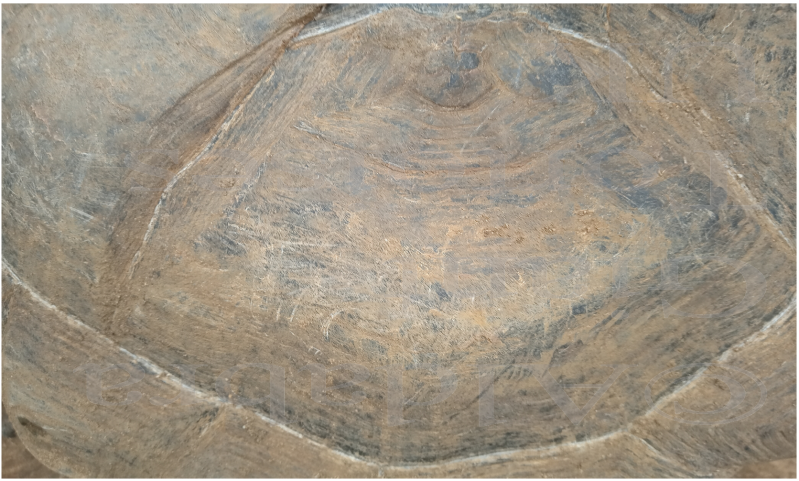
Left perfect scute
Right, scute has a line but there is no split, so it would still be classed as perfect.
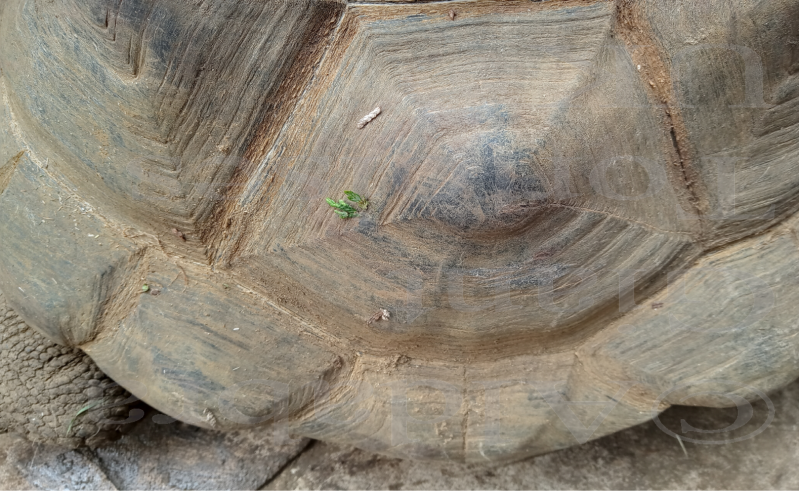
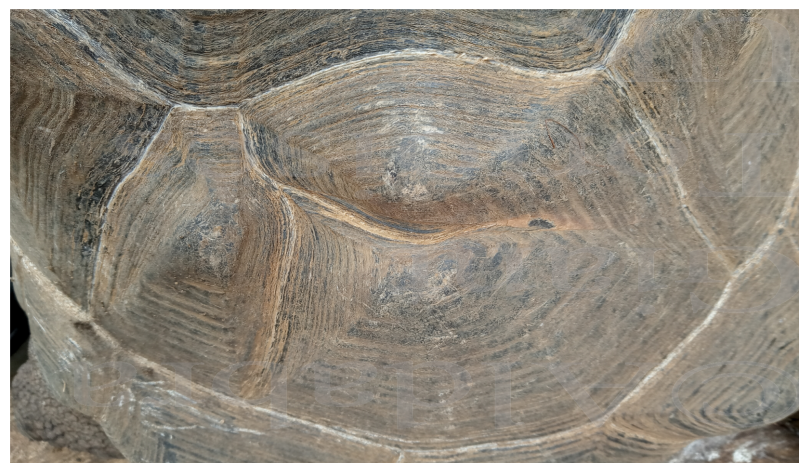
Above, scute has more than one split. It gives the animal character and identifying features.
Right, lower portion of split scute has started to grow out, so that it looks more like a horn or a pouting bottom lip.
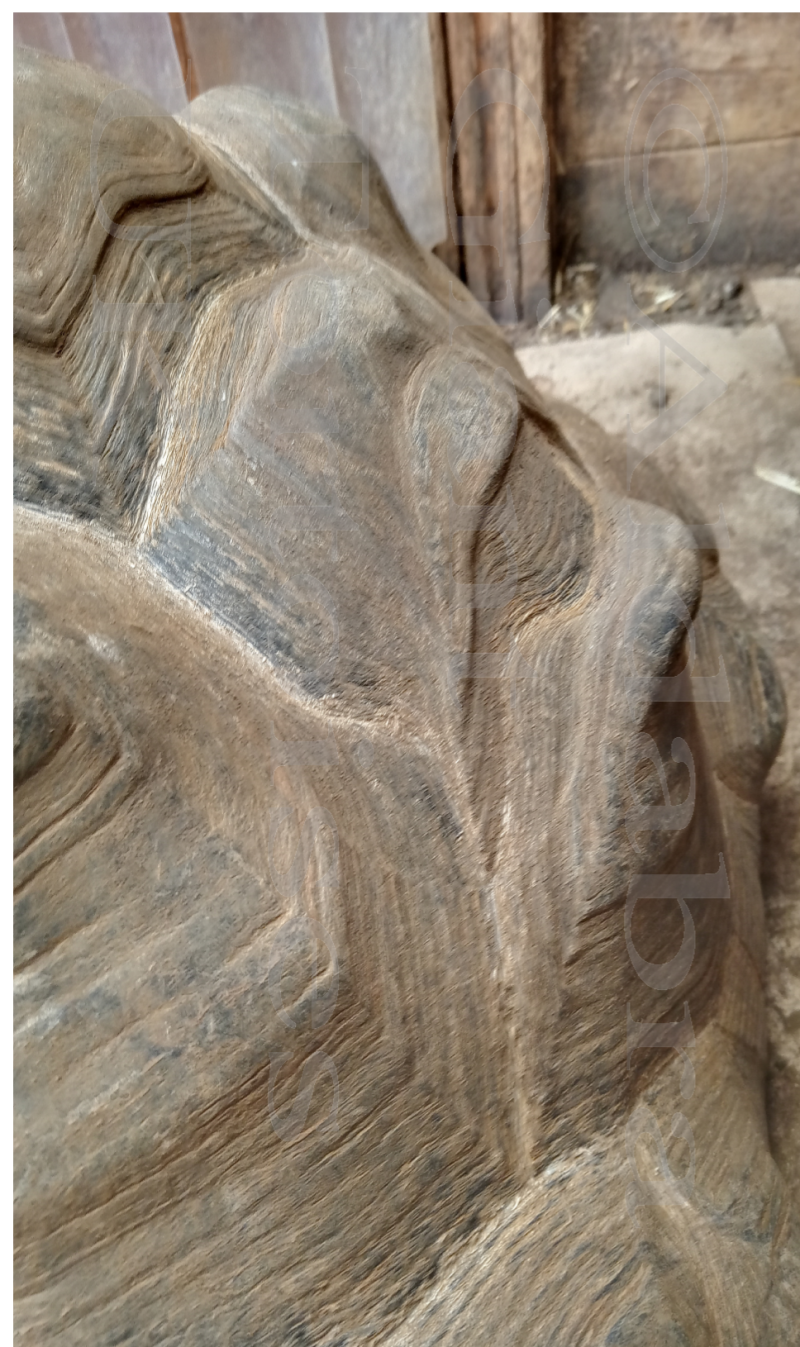
What Is Under The Shell?
There is not a lot of room inside an Aldabra Giant Tortoises body cavity, everything is packed in there quite tightly. For one thing they would not want their insides moving around as they walked because it would upset their balance and cause their soft organs damage.
A tortoise is a vertebrate animal. Its backbone is fused to the inside of its upper shell. The shell design has remained almost unaltered in 200 million years of evolution and is basically an extension of the rib cage, which are outside rather than inside the body. Due to the fusion between shell and bones it can make it harder for the tortoises to breathe as the shell is rigid and does not expand with every breath, like human torsos. It is particularly uncomfortable for them to breath if they become obese, as there is even less room to expand their lungs
Beneath the protection of their tough shells tortoises have all the usual organs and things; in Aldabra their liver is unusually large and is about a third of their whole weight of flesh. The shell, which goes all of the way around them, holds everything in place. Up to 25% of their body weight can be fluid, so they don't need to drink during the dry season as they gain their water through metabolism.
Approximately, the top 1/3rd of their shell is filled with lungs, they are specifically called the Chelonian Lungs because they are more like sponges than big bags of air, which could collapse.
Their respiratory system is driven by a need for oxygen rather than getting rid of Carbon Dioxide like us. This gives them a great ability to hold their breath. One of our big males likes to sit in a water wallow where he can fully submerge his head, and most of his body, we discretely timed him one day and he held his breath for over 7 minutes! this makes them very difficult to safely anaesthetise if they need to go to the vets.
If you startle a tortoise then instinctively it will want to pull its head and legs inside to protect itself. However, in order to fit the head back into the body cavity it first needs to release air from its lungs to make space. The speed of the air being forced out makes a hissing sound, with is not confrontational like it might sound.
The tortoise has an interesting bladder as it can store liquids for longer periods of time, in case the tortoise cannot find a reliable source of water in the wild. A lot of plant matter that tortoises eat contain water, to some degree. So, tortoise, depending on the species, but mainly the larger breeds, like Aldabra and Galapagos, can actually live for a good while with no food or water.
Just below the lungs, up near the front of the tortoise, and working down, there is the stomach, liver, gall bladder, kidneys, and if the tortoise is male then the testes right by the kidneys. Under all these organs are the intestines taking up the centre. Up higher in the chest of the tortoise sits the heart, all of this including their fat pads makes up about half of the animals total weight
The shell grows with them all of their life, although active growth, in Aldabra tortoises, is only until they are about 50 years old, when they begin to bulk out weight wise.
Tortoises are not like some crabs that shed their shells and then find a new, larger one to inhabit, once they outgrow the first one, they keep the one shell for life.
The shell also acts as their very own solar panel system and they usually bask with the rear of their shell towards the sun. It is more efficient that way as there is more scutes to capture the suns rays, and who wants to sit with their head exposed in the sunshine and get a headache.
The tortoises heart pumps blood to all the vital organs and muscle groups, but a large amount of blood is also effectively sent underneath the carapace to heat up before circulating around the rest of the body to raise its core temperature. Optimum body temperature is 30c for metabolic efficiency. This means they require extra heating in their house to provide a basking temperature of between 25 to 35c. However, they do also require cold spots, so they can cool down if they want. Too much heat or too much cold is not good for them, they need a happy medium.

Bing pictures.

Bing pictures.
How Heavy Is An Aldabra Tortoises Shell?
It is difficult to say because you can not weigh it, separately from the body contents, until the tortoise is dead. At a rough guess, probably about one quarter to one third of the total live weight. The large tortoises have very thick, substantial, shells around them, they have a lot of internal organs to keep in place.
Apparently, for a tortoise weighing 21.65kg, who was autopsied, the carapace, shell scutes and attached bones would weigh a combined total of 5.55kg, which is about a third of its weight.
Why Do Aldabra Tortoises Turn Away From The Sun When Eating.
It shields their eyes from the brightness and provides shade from the uvb rays which can damage their eyes. Their skin is also much thinner at the front portion of their body and more susceptible to heat. As their head contains their brain, this is definitely an area that they do not want to overheat, it has least scales on the body to protect it.
Most grazing happens in the wild between sunrise and 9am and 4pm to sunset. So they eat predominantly in a West facing direction in a morning and an East facing position in the afternoon. On a cloudy day it is not as important because of less direct sunshine. Keeping their temperature low allows them to maximise the amount of time they can eat before having to stop and find shade, so that they do not overheat.
Can Tortoise Shell Repair Itself?
Wounds to the tortoise shell can close over and repair but they are never going to be perfect again. Veterinary science has moved on a long way, from wrapping the wound in a bandage to just try and keep it clean. Traditionally damage to shells was repaired by vets by being covered with patches of fibreglass, epoxy resin, dental acrylic, or something similar, depending on the size of the damage. However, there was a risk of a deep abscess or sepsis developing, and the survival of the tortoise was not guaranteed..
There was an interesting case in San Antonio zoo, in Texas, in October 2003, with a 150 year old wild caught female, Aldabra, that weighed 73.7kg. She had an open wound in the carapace, the top of the shell, it was a deep opening in the shell with necrotic tissue and bone exposure. in the right hand side of the carapace, at the junction of the 1st and 2nd costal scute. The wound was 7cm x 10cm and 1 to 2 inches deep with necrosis, bleeding and puss evident. It was thought the wound had been caused by males frequently bumping into her.
The sedated tortoise had the wound cleaned with sterile saline and any necrotic tissue and bone derided leaving a 14cm x 15cm opening. The vets began treating the tortoise with antibiotic injections, to try and combat the infection. Then the wound was covered with wet to dry bandage which was changed every 1 to 3 days for 3 weeks.
At 3 weeks they decided to try a new treatment and negative pressure wound therapy was begun. This commercially available vacuum assisted closure was invented by Kenetic Concepts of San Antonio in Texas. It is an advanced system to stimulate wound healing to increase the capillary blood flow by applying negative pressure to the wound. A Black foam dressing was applied to fit over the wound and this was then covered with adhesive plastic film to create an airtight seal, the suction tube was then applied to this bandage and the other end fixed to the fluid collection chamber.
Being a big tortoise they were able to attach the portable battery suction pump (v.a.c) to the top of the carapace with Velcro straps so she could still move around whilst isolated, this is good as normal behaviour helps with their recovery. The pump was set to 125mhg of continuous vacuum. As battery life was 12 hours they had to use 2 pumps alternatively every day. A variable amount of fluid was collected up to 100ml in between dressing changes. The dressing was changed every 2 to 4 days and six weeks later new bone growth was evident around the wound margins. Eight weeks later there was bone growth showing around the wound. after 26 weeks of this therapy the wound was closed and fully keratinised.
This is a non invasive, localised, therapy to promote wound healing which can also be used on humans and other animals. It speeds up the process of healing. Keratin covered 80% of the wound in 18 months
The extent of the new growth of keratin is not something you would normally see with more traditional wound treatments. This V.A.C treatment reduced the healing time for this Aldabra by many months.
Full reprint of this article “Treatment of a carapace infection in a Aldabra tortoise, Geochelone gigantea with negative pressure wound therapies” can be found in herpetological medical and surgical vol 16 no3 2006 Rob L Coke and Patricia A Reyes-Fore.
We have no connection to this company and fortunately there has never been a need to use this type of treatment on our animals.
My Aldabra Giant Tortoise Has Not Got A Nuchal Scute Does That Mean It Is Really A Galapagos Giant Tortoise?
Nuchal scutes are the smallest shell section on an Aldabra tortoise and are located directly above their head.
It is true that one of the ways of differentiating between an Aldabra and a Galapagos Giant tortoise is that the Galapagos does not have this Nuchal scute whilst the Aldabra does. In reality, 1% or less, Aldabra have no visible Nuchal scute on the top of their shell. However, they will always have one, sometimes it can only be seen from underneath, or on the rim of the shell. There is no standard size, to this scute, they can range from just be a small dot, even on a big tortoise, or they can be more pronounced than neighbouring scutes. There is no known reason for this but, like the split vertebral scute it is probably down to genetics.
Lack of Nuchal scute alone would make it highly unlikely that you have a Galapagos tortoise in your charge. Not all Galapagos tortoises are the famous Lonesome George Saddleback shape. Some of them are domed, just like the Aldabra tortoise shape, it depends which island they originated from. However, Aldabran heads are smaller being no wider than their neck. The distance from nostrils to mouth is much less in Aldabra tortoises and it is more rounded between the snout and the top of the head, which slopes up and backwards, whereas the Galapagos tortoise is virtually flat on the top of the head.
As an endangered species, there are no Galapagos giants sold in the general pet trade, here in the UK, and if you had obtained the animal from other legal methods (like a zoo transfer) then you would have definitely been told it was a Galapagos Tortoise. So, we are confident that you do indeed have an Aldabra Giant Tortoise in your care.
Joke !!
Q. What do you get for trying to steal a giant tortoise?
A: A hernia !
Create Your Own Website With Webador