Please click on any of the above topics, or look in the dropdown sections for more information on Aldabra, and other tortoises.
Information On Aldabra Giant Tortoise Reproduction
The Old And The Young
Who Are The Oldest Aldabra Giant Tortoises?
Let's start with the senior citizens, we believe the current oldest Aldabrachelys Giant tortoise is a male Seychelles Giant tortoise named Jonathan who has been in the news recently. He has lived, at Government House, on St Helena in the South Atlantic Ocean, since 1882. Young Jonathan is now a mighty 193 years old! His officially recognised birthday is 4th December 1832.
Although he lives with 3 other Aldabras, as the Seychelles Giant tortoises is one of the subspecies of the Aldabra giant tortoise there was concern that he may be another “Lonesome George” in the making, and be the only one of his kind left.
Thankfully more Seychelles Giant tortoises have been identified, in recent years, and some of them have been translocated onto other Seychelles Islands and they have begun a successful breeding colony.
Upsettingly, on 1 April 2026 there were reports from a false X account, claiming to be his vet, that Jonathan had died on St Helena. Thankfully this was untrue and he is still alive and grazing. This malicious rumour was not even aimed to be an April Fools joke, it was just a way of trying to get Crypto donations.
The next one is an Aldabran named Esmeralda who is a sprightly 182 years, having been born in 1843, and lives on a small private island, named Bird Island, in the Seychelles. Esmeralda is in the Guinness book of records for weighing in at 296kg, which is a lot heavier than most female Aldabras get but that will be because, despite the name, she is actually a boy. It is not easy to tell the sex of an Aldabra when they are young, so be careful what you name them!
Ours have a long way to go to catch up, our eldest are only in their thirties and the biggest female Bonnie is less than half the weight of Esmeralda.
However, these two are only middle aged compared to a male Aldabra tortoise, called Adwaita, who died at Kolkats's Alipore Zoological Gardens in India on the 24th March 2006. It is thought that Adwaita was an amazing 255 years old and had been born in 1750! He would have lived during the reign of 10 different British Kings and Queens and 19 Popes!
Apparently Adwaita was one of four Aldabra tortoises brought by British seamen from the Seychelles as gifts to Robert Clive of the British East India Company in the 18th Century. The tortoises went to Calcutta Zoo in 1875.
Unfortunately, there are no actual records to back up this claim, a lot of it is hearsay. The zoo was intending to have Adawaitas shell carbon dated to try and ascertain a true figure of age. There have been no reports if this has happened or not, but it maybe that the results were not what they had hoped for. It is likely that if the age had proved to be true then it would have been big news on the internet.
Although several of the UK Zoos, and private individuals, have Aldabras in their collections and some of them are fully grown adults, none of them are as old as these three. People often ask why this is the case? The answer is simple, the sailors, on the old fashioned sailing ships kept eating them! So, none of them made it back to UK shores alive for many many years, despite numerous voyages to retrieve some of these animals, for the viewing enjoyment of the population of the time.
150 years plus is not an unreasonable age for them to reach, especially in captivity, where they have access to modern Veterinary care and a balanced diet. The problem with accurate life span measurement is that the time required for record keeping, spans several human generations, so they outlive the people studying them! It is important to have proof in your tortoises records as to when you got them. Aldabras, and tortoises in general do not usually come with a birth certificate, so, take a picture of it with the local newspaper or something beside it, so that the future will know it was alive at that time.
Where does the oldest Aldabra Tortoise in Europe Live?
The oldest male Aldabra tortoise living, in an EAZA zoo, in Europe, is at Hellabrum Tierpark in Munchen which is in Southern Germany and he was born about 1860, making him around 166 years old.
The oldest female, in Europe, is at Krefeld Zoo, also in Germany, and thought to have been born around 1920.
However, there is a chance that there could be older animals, in private collections in Europe.
Where Does The Oldest Tortoise In The British Isles Live?
The oldest tortoise in the British Isles is probably Speedy who now lives at Twycross Zoo, having previously lived at Blackpool zoo. We believe he was born around 1917 making him around 109 years old.
The next oldest are Twiggy and Biggy who now live at Jersey Durrell Zoo. They were born around 1950, so are around 76 years old. Twiggy was originally given to Gerald Durrell, who opened Jersey Zoo, but she later moved to Bristol Zoo, However, in 2023, when the original Bristol Zoo was scheduled for closure Twiggy and her 3 other companions returned to a new enclosure at Jersey, in the Channel Islands.
Again, there could be older animals in private collections. Unfortunately, as Aldabra tortoises do not come with a birth certificate, it is unusual to know exactly when an animals was born, especially with the early animals, who often came from the wild. Guestimates on age are usually from their size when they first arrived, so it is not an exact science as Aldabras grow at different rates per year.
Turning to the little guys.
How Many Babies Survive To Adulthood?
In the wild it is probably about 50% success rate, at best. Unfortunately, the hatchlings will often be taken by land crabs or rats. There were also other introduced predators on Aldabra Atoll until recently, when efforts were begun to eradicate the goats who competed with them for food. Eggs were often eaten or destroyed before the babies were even born.
Weighing in at only 87grams, and being 3000 times smaller than its mother, with a new, black and shiny shelled, hatching will find it is a big world out there and lots of natural dangers for it to overcome, such as dehydration in the high temperatures, of the equator region, if it cannot find shade.
So, if a mother lays a batch of 20 eggs, approximately half of them will be infertile. Half of the remaining 10 could also succumb to predation when they are young, which means in actual fact only a quarter of the batch laid, that is just 5 of them, have a hope of making it to adults.
Have You Bred Any?
No, and no one in the UK has successfully achieved it either, although one zoo did have eggs laid, a number of years ago, but they were infertile. In fact, it is only very recently that Prague zoo and a private collector, in Europe have managed to successfully breed the Aldabra Giant Tortoise in captivity.
Galapagos Giant Tortoises were bred for the first time in the UK, at Crocodiles Of The World in Oxfordshire, in 2022.
Although, in recent years our animals are showing more interest in mating, they have not yet laid any eggs. It was thought that tortoises need to be at least 25, but probably nearer 40 years old before they reach sexual maturity, in captivity, which is when they reach approximately half their full grown size. However, it has been found that the onset of reproduction is down to the size of the tortoise and not just the age.
Most Aldabras that you can buy in the UK have been bred in the conservation parks on Mauritius and imported to Europe. These are only about 2 or 3 years old, sometimes younger, so you will have a long time to wait before they will breed. It may not even be in your lifetime, there is no set time frame for it to occur. Just because they have reached the size of sexual maturity does not mean they will automatically breed. Not all Aldabra in the wild will breed. They have such a long lifespan that they are not in a particular hurry to pass on their genes, as long as it happens sometime in their lifetime it does not seem to matter to them whether they are 43 or 143 years old.
Aldabra tortoises are Polygynandrus, which means they will mate with more than one partner. Just like the smaller breeds, the Aldabra male makes a deep trumpeting call when mounting the female and mating, so you would have to have very understanding neighbours! Mating season, in the wild is between February to May and the eggs would be laid between June and September.
Our two largest tortoises are only in their late 30s and so are only just coming into breeding age, but they are beginning to show more interest. However, tortoises are often not particularly gender sensitive! The boys will try to mount both sexes, when they are in the mood but mainly it is a show of dominance against other males.
There is a considerable size difference between most adult male and female Aldabras, the boys are always much bigger than the girls. We have evidence of this with two of our tortoises, Trojan our number two male is 160kg whilst Bekki is 65kg. We know from their import paperwork that they both came into this country at the same time, they were both yearlings and probably siblings but there is nearly 100kg size difference between the sexes.

Do They Breed Well In The Wild?
On Aldabra they have everything that they need to be successful breeders
- A wide choice of mates.
- Right age range.
- Correct food and environment for a healthy population.
- So, they have a self sustaining population of around 150,000 tortoises on Aldabra atoll.
In the past efforts have also been made to translocate giant tortoises from Aldabra to neighbouring islands to protect the species if there is a natural disaster in the area. Some of thee relocations have been more successful than others. Some of the new populations have bred but others have not.
Have They Been Bred In The Rest Of The World?
Aldabra are popular in the pet trade and in America, particularly in Florida they have a successful. America have a small breeding population in a couple of zoos and private ownership.
Taiwan has also had success with breeding them for the first time at Taipei Zoo in 2018. In Europe, Beauval Zoo in France, and a private owner in Germany have bred hatchlings but no one outside of the Indian ocean region has managed to produce second generation breeding.
Pre 2006 one collection in the UK has had eggs. The Life Fellowship Bird Sanctuary and Jacksonville Zoo in the USA, Sidney Zoo in Australia, had a successful breeding but they were isolated events. La Vanille Crocodile Park in Mauritius, has been one of the main providers for pet trade hatchlings for many years. In the USA a lot of their pet trade bred Aldabra Giant Tortoises come from Florida. Outside of the Seychelles all but two of them have been single events, only 4 groups in the Seychelles that are regular breeders.
Successful breeders have an abundance of natural food and an area of at least 50m2 per tortoise. Male female ratio is less than 2-1 with a starting group of at least 12 adults. Regular breeders are mainly in Mauritius and Florida. However, recent translocations of animals to different islands in the Seychelles has been successful, in some cases, and there have been wild breeding events.
Why Do They Not Breed In The Uk?
Until the last 20 years there have been so few Aldabra in the UK, and those were kept in fairly isolated numbers of ones or twos, so there was very little experience on what they require to breed. More recently people have been showing more of an interest in working with, and finding out more about these majestic animals, and how we can improve their lives in captivity. It had been thought that Aldabras would need to be around 40 years old before they breed, in captivity in the UK. However, the European successful breeding has disproved this, they can breed earlier if they want to, when the males first reach puberty. Some of our twenty something animals have been showing interest in each other in recent years.
Part of the problem is that there were so few animals in zoos and collections in the UK, and many of those are just small ambassador groups, of pets, or that the zoos were not interested in breeding their animals, so there is very little information on what conditions they need. Or how we meet those needs, as we are at the other side of the world from where they would normally live and consequently our environment and weather is very different.
Many of the larger animals in the UK have all been together for many years and may not be feeling the attraction for each other. There may also be the issue that they could be closely related , if they all came together as a group at the same time. They may instinctively not want to breed with siblings, or they may just not be interested in breeding full stop. We suspect that there is some environmental conditions that will trigger the urge to breed but are not clear on exactly what it is.
Some of the breeders in the Seychelles say that there need to be a group of at least 12 before they will begin showing interest in mating. It was already known that there needs to be enough boys for competition and girls for choice in the group.
We believe that there have been Aldabras who have produced eggs in the UK but they have not been fertile and it has been a one off event, not a regular occurrence.
Over recent years more effort has been going made into tying to replicate the requirements for them to be successful here but it is a slow process. We have very different weather, soils, foods, intensity of daylight and temperature etc and we will only now that we have got it right and mimicked the wild conditions when they do produce viable eggs. If even one of those conditions is sightly off then it could affect whether or not they choose to breed.
In the wild there is only regular breeding on Mauritius and some of the Seychelles islands, not all of the islands populations reproduce. So, if they cannot achieve it then it is even more of an uphill struggle for collections elsewhere in the world.
Are They Married?
At a show one day a young visitor asked about the tortoises, "Are they married?" No, tortoises do not pair bond, they are not monogamous. The female can mate with a number of different males, most mating attempts are not successful. However, a female once mated, can preserve the males sperm for several years and use it to fertilise her eggs at a later date.

Are Our Aldabras Related?
The animals in our collection have come to us, from all over the country, they differ in ages from youngsters to around 40 years old. However, as far as we are aware none have come from the American bloodlines. Some came directly from Mauritius but others came via France and Spain. Nevertheless, they were probably all born in the conservation parks on Mauritius, or the Seychelles region, where there is a successful captive breeding population of Aldabra Tortoises. There will be some ancestral connection between them but without DNA testing we can’t be sure to what extent. Now that scientist have decode their Genome it will be exciting to potentially learn more about out tortoises past.
Our tortoises all came to us at different ages and at different times in their lives, so it is hard to know if they are closely related. As I said, although they ended up with different previous owners, we know that Trojan and Bekki were imported together as youngsters and probably came from the same batch of eggs, as they look very much alike. However, as all captive eggs are removed from the nests, dug by the female, by the keepers, and incubated artificially, a batch could consist of offspring from several different parents. So even though they were born at the same time they could be cousins, or totally unrelated, rather than actual siblings.
We have recently discovered that some of our Giants might be Seychelles Giant Tortoises, which are a sub species of Aldabra Giant Tortoises This means that in the future we may need to separate the group to prevent cross breeding. However, we need to consult with an expert to confirm our suspicions.
Scientists Have Decoded The DNA Of Aldabra Giant Tortoise.
In 2022, with the help of Aldabra tortoises at Zurich Zoo, researchers were able to decode the Genome of the Species for the first time. By comparing these DNA results to 30 Aldabras on their home Atoll, they were able to identify genetic differences and pinpoint which of the four islands the Zurich tortoises originated from. This will be a great help to researchers with future rewilding projects, to enable genetically diverse groups to create healthy populations. This will be really interesting for the Aldabra private collectors, once the genetic testing for tortoises becomes more widely available to those outside of the scientific community. it would be very interesting to learn how closely related the tortoises in private collections around the world are, as so little is known about their past. A number of the older ones in European zoos are likely to have been wild caught and current keeper generations know little about their origins and accurate age range.
How To Tell The Difference Between The Sexes?
Over the years more and more has been learnt about Aldabra tortoises, as more animals come into this country and there are more tortoises to compare with each other. The larger adults are easy to sex, however, sexing a younger Aldabra, with certainty, is still difficult.
As with most tortoises, the adult males have a longer tail, which will reach or almost reach their hind leg and a concave (internally bent) shell underneath them to help when mating. Mother nature has evolved this so that they do not slide off the back of the females shell and risk rolling over and not being able to right themselves, which would mean death. As mentioned above, Aldabra males will generally be quite a bit bigger than the females, maybe 100kg heavier and twice her size, at breeding age, and have a larger head and more muscular neck, so that they can peer over the top of her body and shout down at her to stand still!
However, it is very difficult to know whether Aldabra tortoises are boys or girls until they are about 10-15 years old, (approx 2ft long) without asking the vet to give them an internal examination, like you would with a snake. However, this can be quite stressful for the animal, and there is potential to cause damage to the sex organs during an endoscopy, which is what the test is called, so we have not had it done. The alternative is an ultrasound but this can be difficult to see clearly due to the thickness of an Aldabra Giant Tortoises shell, the signals struggle to pass through it to get a clear picture. Frankly, they know what they are, and their care is not affected by what sex they are, so we do not urgently need to know. The tortoises will naturally reveal their sex as they get older, well before they are able to actually breed, so all we have to do is wait. Aldabras all start out with a short tail, which makes you think it is a female, it is not until they approach sexual maturity that male tails begin to get noticeably longer. Shell shape can also change over the years, from being a hatchling, too. The good news is we have a 50% chance of being right!
Unfortunately, this means you can put years into looking after them thinking that you have a pair who might breed, only to discover that you actually have two of the same sex! When hormones begin affecting them, both sexes will try mock mounting each other, so this is not a definitive indication of male on female, they could quite easily be two boys or two girls.
Female Aldabra Giant Tortoises will grow less after they reach sexual maturity, as they invest more into reproduction than their own growth. Females can reach maturity at 45kg and almost never reach 180kg. Although males can reach puberty at around the same time and their sperm is immediately fertile, at this point successful breeding is rare because he has to grow large enough to be able to reach to penetrate the female. Although they will mount smaller partners, both male and female, the females are not ready to breed at that size. Most successful pairing are with an older, sexually mature, larger male, who will naturally impress the female with his size and she will be more receptive. The male will also be large enough to hook his front legs over the front of her shell and prevent her from moving away. The more secure he is able to grasp her the more secure he will feel being raised up on just two feet and the grater chance of a successful mating taking place, because he will also be lined up correctly. In captivity males will grow to be 90-320kg but in the wild there is a narrower weight range of 115-250kg. Females will very rarely reach 180kg, normally their maximum weight is around 130kg.
An adult females tail is much shorter than an adult male, less than half way from shell mid line to base of her hind leg at around 5 inches, or less than 12 cm. Her Cloaca or vent is nearer to the base of her tail (closer to her shell) whereas a males Cloaca or vent is closer to the end of his tale (the tip). Adult males usually have a tail of around 15 inches or 38 cm. Scientists have calculated that a male with a carapace length of 38 inches or 96cm will have a tail length that is 39% of his carapace length.
In Aldabrachelys Gigantea, the Aldabra giant tortoise, the adults have distinct differences in their Xiphiplastral points, those are on the scutes closest to their tail on their Plastron The females are a spread inverted v shape , with more rounded Xiphiplastral points, whereas males are more of an stretched inverted horizontal c shape with sharper points. Males have wider and flatter anal scutes than females.
In smaller or younger Aldabra tortoise it is more difficult and ambiguous to judge by tail length and shell shape, as they all tend to look more female and then you later discover they are actually boys.
At around 70cm they will begin showing as boys, males have longer thicker tails more muscular at the base, a males tail will grow passed the Xiphiplastral points on shell Plastron, Cloaca are often positioned further away from bodies in males than females, this helps to protect, and strengthen, their long penis during mating.
Females have a shorter and thinner tail. It is more baggy looking at base, not as muscular.
Some experts and experienced breeders can tell with an 18 inches, 4 years old , animal what sex it is, although some of the tortoises have not developed distinct sex identifiers by this stage, so it is not always possible. This is about the age that the concave shell is starting to show. If you can feel dips in the underside of their shell, like natural hand holds, when you pick them up, then it is probably a male.

Female Aldabra Tortoise
Both sexes can tuck their tail either way- left or right.

Just like with the smaller breeds, the males have a much longer tail than the females.
Does The Incubation Temperature Affect Which Sex The Hatchling Will Be?
Interestingly scientists have discovered that embryos developing inside the incubating eggs actually have identical reproductive morphology, despite clear differences in incubation temperatures and duration, which should result in different sexes being produced.
Upon autopsy examination, the Cloaca of compared embryos, which had been incubated to different temperatures, had a distinct penis like structure. It was small but structurally identical to an adult Aldabras penis. The Gonads (testes) were elongate and brown structures positioned dorsally to the kidneys.
These dissections appear to show that reproductive traits of males and females are no different until after the hatchling stage. This means that they cannot be 100% reliably sexed just from the length of time and incubation temperature they were subjected to in the egg.
There are also no differences in the tails lengths between the hatchlings. As the tail grows the number of scutes on it will remain the same, they just get bigger. For an Aldabra tortoise incubated at a temperature of 28-30c, which has 14 scales on its tail then it is most likely that it will be a male.
Do Tortoise Have Periods?
Tortoises have reproductive cycles, which are certain times of the year when they can mate resulting in viable eggs but they are not periods. Males will then only mount the females during the mating cycle, they are able to scent when a female is ready for breeding. There is evidence that females produce a musk to attract males at breeding time, the males definitely sniff at the females. For most tortoises, in the wild, breeding time is August to November and then November to April, to lay eggs. In the UK in captivity these time scales differ a little.
Experts believe that mating only occurs when the ovaries have fully developed, and both the male and female tortoise experience regulated testosterone cycles.
For Aldabras it is in their twenties to thirties before they come into breeding age but as it has not happened much in Europe and as only very recently, successful hatching have occurred, it is difficult to be exact. It was always believed that they needed to be around 40 years old for males to be sexually mature but indications are that successful mating can happen when he males first reach puberty, which is at the younger end of the scale, and their sperm is instantly fertile. Many variables could be involved but because they are such long living tortoises, lack of the urge to breed when young could be a factor. Or it could be a physical thing or an environmental thing, more study on the subject is required.
If you do notice blood around your tortoises private parts, whatever the sex, this would indicate an injury or illness of some kind and should be investigated, by an exotics vet, as it is not normal.
Do Male Aldabra Tortoises Have Testes?
Yes, but they are internal and not external to the body.
Both male and female tortoises have distinct reproductive organs that are responsible for fertilization and the production of offspring. Male tortoises have two testes, which are located near the kidneys inside the abdominal cavity. Sperm is produced in the testes and then transported through the body to the cloaca, where it is stored until mating.
What Is A Hemipenis?
Male tortoises have a specialized mating organ called the Phallus or Hemipenis. This is a paired, erectile organ that is located inside the Cloaca, which is the opening through which faeces and urine are excreted. The Hemipenis is used to transfer sperm to the female during mating.
The Hemipenis of a male tortoise is typically covered in spines or ridges, which help to anchor the organ in the female’s Cloaca during copulation. The size and shape of the Hemipenis can vary between different species of tortoises, with some having longer and more complex organs than others.
Aldabra have a remarkably long tail, reaching nearly half the length of their Plastron and sheathing a very long penis. If the male slides off the females shell during copulation, he can land with his shell weight on his still extended penis (ouch!) this can injure it, twisting or potentially breaking it. If the tortoise is unable to safely retract his penis back into his sheath then he will need to be taken to a vet, as this is serious. It could easily sustain further damage as he moves around and could have long term implications for his health.
Do Females Have Ovaries?
Yes, female tortoises have a pair of ovaries, which are located in the abdominal cavity. Eggs are produced in the ovaries and then released into the oviducts, which are long, muscular tubes that lead to the Cloaca, through which they are laid. The oviducts are responsible for the formation of the eggshell and the fertilization of the egg. Just like in a chicken, they will only apply shell to the egg when they are approaching the time they are ready to lay. If for some reason the tortoise does not lay, she can usually reabsorb the egg back into her system. If this does not happen then it can cause egg binding, where the egg gets stuck mid lay and then blocks her from being able to go to the toilet, causing health issues. If this happens in captivity she would need to be taken to a vet, for treatment, if it happens in the wild she may die. Excessive straining can cause a prolapse Cloaca, where the inside muscles come out of the body, and this should be treated by a vet to ensure it is slipped correctly back into position.
Tortoises have several adaptations in their reproductive system that help them to survive in their environment. One such adaptation is the ability of female tortoises to store sperm for up to 4 years, allowing them to fertilize eggs even if a male is not present. Additionally, tortoises are able to adjust their breeding patterns depending on environmental conditions, such as temperature and food availability.
Reproduction
Aldabra tortoises mate between February and May but they do not pair bond with their partner. As mentioned, the female is usually a lot smaller than her partner but they are very strong. The female will stand up, or just lift her bottom, during mating to provide access for the male to penetrate her. This means that she has to support her own weight, as well as the males considerable bulk pressing down on her. Adult females usually weighing in at about 100 to 150kg when fully grown. However, the big males can be over a quarter of a ton (250kg), that is a lot of pressure on her back legs! Neither animal seems to get particular pleasure from the copulation.
Sexual maturity in Aldabras is by size rather than age, most will begin to reproduce when they reach approximately half their full grown size, which is usually when they are around 25 years old. In the UK it was thought to be older but over recent years a number of our younger tortoises have been showing interest in each other, so age range around 25 is relevant here too. When mating the male rhythmically thrusts in 2 to 4 second intervals, depending on size of male, smaller ones in shorter intervals, whilst giving a deep accompanying moan or grunt. These thrusts are powered by the hind legs and not the pelvic girdle which is fused to the inside of the shell, up to 44 thrusts are performed before he gives up, slides off the female, and goes back to eating. a copulation event usually takes place in the early afternoon and can last up to around half an hour with the males loud groans being heard from afar. in our group males have clear favourites amongst the females. There is no prior courting before mating, Aldabra are not like smaller species of tortoises who will chase after a female biting and tugging at her legs, or ramming into the side of her shell with the front of theirs.
After mating the female descends to the lowlands to lay her eggs in softer ground, which is easier to dig. These tortoise are Oviparous, which means the females lay eggs that she has carried for about 10 weeks. They are usually laid, between June and September, in a dry shallow nest on the ground that she has dug out using her back leg but if the soil is deep enough it can be up to 10 inches deep. Nesting occurs at dusk or in the night, when it is cooler, allowing the females to avoid overheating, it is hard work for them to dig out a nest using their back legs, especially as they cannot see what they are doing. Next time you go to the beach, give it a go, lie down on your stomach and try digging a neat hole to a foot deep, at the end of your torso, just using your feet and toes, it is hard, frustrating, work.
In the wild, the females migrate to dryer more arid zones in order to nest. The female will carefully choose the oviposition, the location of the nest, before she begins to dig. She may even dig test holes, or decoy nests until she is sure that she has picked just the right spot. this nest location will be 30-40 cm deep and needs to be exposed to solar radiation for 6 hours a day. the female can pick a very precise spot and can reuse it again for future clutches
Hatchlings may remain in the nest for up to 10 days before digging themselves out. Nutritional contents of yolk sac sufficient for several weeks whilst waiting for rains to fall and the vegetation to grow.
Nest digging is a task that can take several hours and during the process the female urinates frequently into the hole to soften and bind the soil so that it does not keep tumbling back down into the cavity. In the wild the female tortoises lay 4 to 14 eggs, which are coated in mucus slime to help with passing, between February and May, they are about the size of a golf ball but in captivity it can be as many as 9 to 25 in a year but usually not all of the, eggs are fertile. Once finished, the female drags herself over the nest to disguise it but after the eggs are safely covered over, that is the limit of her involvement; she will return to higher ground to feed and recover from her exhortations, she does not care for the young, she is not maternal in any way and with luck the babies will hatch about 8 months later, in October to December, when they are on their own in terms of survival.
In the wild, in high density areas, where there are lots of tortoises living, females lays four or five eggs every few years but in low density sectors, on the island, multiple clutches can be produced several times in the year. On Picard there is an average of 19 eggs laid but on Grand Terre, where most of the tortoises live it is only 5 or 6.
The duration of incubation is temperature dependant and can take between 73 to 160 days, depending on temperature ,but it's usually between 98 to 148 days, however, it can take as long as 250 days. Traditionally eggs incubated at warmer temperatures (30 degrees Celsius and above) produce females, and hatch more quickly, they will be the first ones to hatch if incubated for a mixed group. meanwhile those incubated more slowly at lower temperatures (29 degrees Celsius and below) are more likely to produce males. However this is not guaranteed, with Aldabra tortoises. This temperature is determined by the depth at which the eggs are buried in the ground. a shallow nest, nearer the surface will be warmer, whilst eggs buried deeper will be cooler. High humidity levels, of over 80% are important for a successful hatching, which is why laying occurs during the wet season on Aldabra.
Within the incubation period, sex development occurs about the beginning of the middle third of the gestation period, somewhere between day 25 and day 75. If temperatures are too high, this may lead to deformities or death of the embryos.
Babies tend to all emerge during the same 2 week period, which coincides with the rainy season when food will be most abundant. It can have taken up to a month to dig their way out of the nest. The babies are about 2 inches long and are leathery to touch until the air begins to harden the shell, unfortunately it does make the offspring particularly vulnerable to predators. The baby Aldabra breaks out of its shell with the help of a beak tooth which is present on its mouth at birth and then quickly wears off.
The new born has a neutrian sac, attached to its umbilical, when born, allowing it up to a week before having to forage for food, so it has a chance to gain movement after being cramped up inside the egg. They have all the instincts needed to help them to survive, without being directed by an adult.
When Is Aldabra Tortoise Sexual Maturity?
On Aldabra females usually reach sexual maturity between 17-24 years, males 18-30 years but in captivity they seem to take ake longer to mature, or show sexual interest, this may be because they are kept in smaller groups as a rule. On Aldabra females usually reach sexual maturity between 17 and 24 years, males 18 to30 years but in captivity they seem to take longer to mature, or show sexual interest, this may be because they are kept in smaller groups as a rule
Males will reach puberty at around 18 years old and at this point their sperm will be fertile and they are capable of breeding, with smaller females. However sexual maturity will not be until later when the Plastron of males becomes increasingly concave during growth. this is the reason why largest and older males have better mating success. flatter Plastron males can be easily shaken free by the females. The concave Plastron helps to lock them securely in place. The females are also more compressed with a mature male and will be more cooperative and receptive to breeding.
Size of the males is a problem with mating, this is why people are unsure how old they need to be for successful copulation. from our own experience our bigger males are not yet big enough to mate with our larger females, simple anatomy makes them unable to reach to penetrate them, therefore it seems like you need a bigger male and a smaller female. However, a male mating with a larger, older female, has its advantages. she will be able to produce larger eggs which will hatch larger and more robust babies able to make the most of the available faster and grow strong. or she will lay more eggs, resulting in a potentially more successful breeding as the male has passed on his genes to a larger number of offspring in one batch. a
Do They Always Lay The Same Number Of Eggs?
Number of eggs produced is almost in direct response to the amount of food available. If there is a drought the female will not lay for various reasons.
-
She will struggle to dig the hard earth , taking longer and endangering herself to overheating in the open area.
-
There is no water in the ground for the egg to absorb and help to grow the hatchling, so she will instinctively know that there is little chance of development and or survival, so she does not bother. Successful eggs hatching in an incubator need high levels of humidity
-
Prolonged water shortage will make it difficult for the hatchling to dig out through the hard ground, which will become very hard as it dries out as the water content evaporates in the heat. It can take up to two weeks , in normal conditions, for the hatchling to emerge and they have limited nutrients in their egg sac to help them survive until the y can reach the surface to feed. Harder ground will require more effort and more time, vastly reducing the chances of them getting out alive.
-
Digging a nest, producing and laying her eggs, is a lot of energy for the female to expend when she instinctively knows in what conditions it is unlikely to be a successful endeavour. Therefore she holds the eggs inside her until more favourable conditions develop.
-
The size of the eggs can be influences by both the size of the mother and both her condition and the environmental conditions around her. Eggs will be between golf ball and tennis ball sized. Larger females can lay larger eggs which will produce more robust babies, who are able to be more productive early eaters and this make the most of the rainy season abundance of food.
-
In less inhabited areas on Aldabra they can lay up to 3 clutches n a year, normally they would just lay one or two. A larger female would be able to lay more eggs in one breeding season.
If there is an increase in rainfall the tortoises can respond by increasing the number of eggs they produce in that batch, to compensate for not laying earlier. More rain means more food both for the female prior to laying so she is healthier and more food available when the eggs hatch out for the youngster to eat.
How Big Are The Aldabra Babies?
Freshly hatched baby Aldabra Giant Tortoises are around 2 to 3 inches (8 cm) long, when they are born, which is about 3000 times smaller than their mother. They will weigh about 50-60g, the shell shape is low, without the parents familiar dome shape, so that they can squeeze inside the egg. They are also a dark grey black colour to help with camouflage by making them less obtrusive but also allow they to warm up quickly so that they can get to eating early. They will have cooled down a lot during the night, so being able to eat from the beginning of the day is important. The babies are voracious eaters when they are young.
They will be about 4 inches long when they are 6 months old. They have to be at least 4 inches long before they can be imported.

Why Does It Take So Long For A Giant Tortoise To Hatch?
A Herman tortoise takes 53 to 120 days to hatch but is usually around 90 days and weighs on average around 10g whereas an Aldabra weighs 50g so it does take longer to develop, 73 to 160 days. there is also the environmental issue which accounts for such a wide span of hatching dates.
The female breeds and nests in the rainy season, which lasts about half of the year, it takes her about 10 weeks after mating to produce the eggs so they are ready to lay. Depending on when she lays the eggs, a shorter incubation time would mean the babies would hatch during the dry season when there is less food and water around for them. This would make their early life much harder and risk unhealthy babies growing up, or raise their chances of dying. So, if they develop more slowly then they will be born at the beginning of the following wet season and there will be plenty of food around for them to eat. Giving them the best start in life and raising the chances of it being a successful hatch. Mother nature is very clever at working these things out. the moist ground around them actually stimulates the eggs, telling them that it is the right time to hatch, so they can dig their way out more easily and also provides vital food and water for the youngsters.
Aldabra babies can take up to a month to dig way out of egg and nest, Herman and other smaller breeds can take a week. so do not expect instant action from them when they are born it is very tiring for them. They will just want to find a dark comer and rest for a while.

Could Aldabra Tortoise Eggs Actually Hatch Naturally In The UK?
Anything is possible, but it is highly unlikely that a batch of eggs laid in the ground in the UK would successfully grow and hatch, especially Aldabra eggs going to full term. One hundred and sixty days is over five months and we do not have consistent enough ground temperatures for that to happen.
A smaller breed tortoise like the Hermann takes a minimum of 53 days, so if they were lucky, and laid in a sheltered spot, at a time in summer when we had a run of warm weather then it is just possible. However, fluctuating temperatures during incubation is much more likely to increase the chances of the babies being born weak or deformed in some way. It is a much safer option to put the eggs into the incubator, if you want to hatch them but there is always a very small chance that you could go outside to your tortoise pen, one day, and find the unexpected miracle of small hatchlings rushing around in there!
Do Female Aldabras Have Any Choice About Whether They Get Pregnant?
Yes, successful mating is the females choice, if she does not approve of the male, then there are many things she can do to stop the mating from being successful.
A female will walk away, or prop herself up on her front arms, to dislodge the male if she's not interested. Or she will wiggle her hips from side to side the try and unbalance her partner. Males are conscious that if they roll over they may not be able to get back the right way up and die so if they are not stable when mounting the female they are more likely to give up and leave her alone to escape.
If the female does not want to mate she will try to walk away or whip her stumpy tail from side to side to fend off unwanted penetration or make it as difficult as possible for him to penetrate her. The male cannot see what he is doing so most mating attempts are unsuccessful, as they are in the wrong position, and in some cases the completely wrong location. Only with the female accepting him and moving into position will the penetration be complete, if the female is willing and cooperative she will just lie flat on the ground.
Often the male surprises a female by just mounting her from behind. Large males can use their sheer body weight to incapacitate smaller females and try to force mating. females will usually be uncooperative and try too walk away or turn around or rise up so her tail becomes hidden under her shell, making it impossible for the male to insert his penis. If there as a low hanging branch or an obstacle in front of her she will walk beneath it, or clamber over it, in an effort to unseat her unwanted partner.
Dominant males can regurgitate some food from their crop with every loud groan during mating. this has been witnessed in the wild and in captivity. It is their way of taking a lady out to dinner! these pieces of food fall in front of the females head, intending to both distract and appease her but if the wants to eat them she has to lift her rear end slightly which gives him access to her tail.
A 90kg female can carry a 227kg male on her back for a surprising length without dragging her body on the ground whilst she is being mounted. Walking away makes it more difficult for the males to keep up, only walking on their back legs.
A female can slow or stop her reproduction cycle at any point, she can save the males sperm inside her for up to two years before allowing it to fertilise her eggs. she can halt the growth of the egg for a similar period and if she becomes short of food she can absorb her own egg, for the nutrition and delay breeding until the weather is improved and she has a better chance of her nest being successful.
Female Aldabra being able to store viable sperm inside themselves, allowing them to fertilise eggs even when a male is not present, is what may have happened with the Aldabra founding event. This was when only one female made the initial trip from the mainland to Aldabra but was still able to use the stored sperm to fertilise her eggs and thus created a new generation on the Atoll, all descending from one Aldabra Eve.
Is Nesting Always Successful?
No, it is a learned skill. first few years the female will probably just drop eggs on the ground, eggs are a pinkish white and usually around the 5cm mark, in diameter. Often they will produce smaller, infertile, eggs in the first year before becoming more fertile for the next batch.
Gradually she will learn to be a successful nest builder but it could take a few seasons for her to get it right, it can take up to 4 hours to dig a nest, depending on the type of ground she is excavating. The smooth walls are a sock shape of cylindrical walls with lateral extension , at the bottom, to serve as air filled pocket. eggs coated in sticky slime to reduce speed they tumble into the pit., lessening the chance of them breaking as they drop and bang into previously laid eggs. She does not want to have gone to all of this effort for them to break in the nest.
Nesting on Aldabra takes place in the season with shortest number of daylight hours, distinctly less than 12 hours.
If the female ceases to produce eggs she is unlikely to be a mother again, or even lay eggs. With an old tortoise, laying for the first time, is more likely that it is infertile as sex organs atrophy over time.
Are There Any Natural Threats To The New Hatchlings On Aldabra?
- Bird threats come from the White Throated Rail, and the Sacred Ibis, especially targeting the newly hatched tortoises and turtles.
- Hatchlings up to the size of 50cm will be taken by coconut crab, which is a large nocturnal species.
- Norwegian black rats, that live on the island, also pose a threat both to the eggs and young but also inflicting damage on older animals too, they are in introduced species.
- Cats were introduced by previous human occupants that tried to make Aldabra their home. The cats have now gone feral and cause problems of their own as they can also take the babies and not the rats they had been introduced to kill. At one time there were almost 600 cats living on Aldabra, however, the feral cat is almost eradicated from the island but it is more difficult to eliminate the rats. A feasibility study is being conducted before this is tackled.
Over Population In The Wild
Aldabra has a successful self sustaining population of around 150,000 tortoises, however this would not take much to become overpopulation. This would cause problems such as the tortoises stripping the landscape of every morsel of food on Aldabra, meaning so they have to sit there, starving, whilst literally waiting for their lunch to grow.
Scientists have noted there had been a reduction in the native populations fertility to combat this, with both lower numbers of eggs being produced and a greater time between batches of eggs being laid.
To prevent over population is one of the reasons why groups of native Aldabra tortoises are removed from the island and translocated to other suitable nearby neighbouring islands to begin new colonies.
The weather and the amount of food available naturally controls the population of the tortoises.
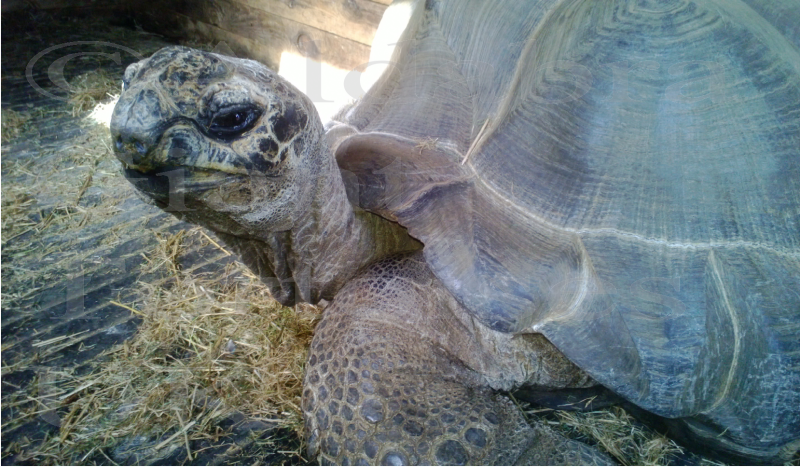
Joke !!
As, Jonathan, the world's oldest tortoise, in captivity, celebrates his 193rd birthday, he reflects on the changes he has seen in his life - About ninety cardboard boxes and the introduction of colour newspaper!
Create Your Own Website With Webador