Please click on any of the above topics, or look in the dropdown sections for more information on Aldabra, and other tortoises.
Information On Tortoise Health
Are They Reptiles?
Yes, tortoises are an Ectothermic being, which means it is cold blooded. They have no external insulation, such as hair or feathers, and have not got a subcutaneous layer of fat to keep them warm. A tortoises metabolism, and blood circulation, is not effective enough for them to maintain a constant level of body temperature, all day, which is why they need to bask under the influence of external heat sources. They use the sun, thermal heat lamps or sit on underfloor heating, to regulate body their temperature for them, and this is why they spend many hours basking. They will naturally chill down over night and need to spend time in the morning warming up so that they can move around, to feed.
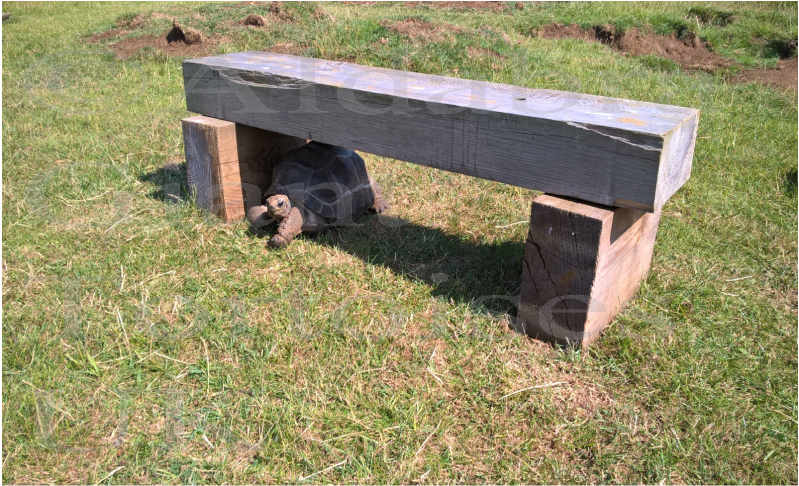
Perversely, in the wild, Aldabra tortoises will the need to find shade, around 10am until around 2pm. This is when the sun is at its hottest and they need to cool their body temperatures, or risk dying from over heating, because the cannot sweat, or pant like we can. They would also risk loss of body liquid through evaporation if they remained out in the hot sun and with very limited water supplies on the island liquid is precious and hard to replace.
Have There Always Been Giant Tortoises On Earth?
Yes. Once life began to form and diversify, to fill the different niches in environment on the planet, tortoises began to grow in sizes and a variety of shapes, this included small to the very large, much larger than giant tortoises of today.
Tortoises and crocodiles / alligators are two of the most ancient reptile lineages on the planet, they have been around for millions of years. There was a type of giant tortoise even, towards the end of the period, when the dinosaurs were roaming around. Tortoises, closer to how we know them today, began to thrive and ranged over most parts of the world after the asteroid, that wiped out most of the large dinosaurs, landed 66 million years ago.
However, nothing compares to Megalochelys Atlas who lived 10,000 to 5 million years ago and is considered the biggest land tortoise on record, standing 2m tall. Apparently it was about the size of a VW Beetle car! Unfortunately early man hunted it to extinction.
What Is Tortoise Husbandry?
Husbandry is a term used for how best to look after your tortoise. It is based on book knowledge and observations, both your own and learning from the many keepers before us who have kept, and made mistakes with, these animals so that we can keep them in better conditions. Sharing this collected knowledge allows other keepers and owners to ascertain the best way, and what facilities are required, to keep our tortoises in optimum health.
Generally, husbandry covers the best conditions that the tortoise should be kept in, which includes the appropriate food and amounts given. Also, the type of housing and pen required and the best heating, humidity and lighting set up for the tortoise. The number of animals and sex bias you should keep them in.
Everyone lives in different environments, around the country, and the wider world. What works for one owner may not be as successful for another owner but the basic requirements will still be the same, we just may have to get creative as to how we provide these requirements, so far from their natural habitat.
Do They Like Hot Weather?
Being reptiles they need heat and sunshine to get up to temperature and their shell acts like a solar panel, allowing them to do this in the most efficient manor possible. Just like our heart does, a tortoises heart pumps blood around the body and this includes a large amount of blood which is effectively sent underneath the Carapace (top of their shell) to warm up, before continuing to circulate around their body, a bit like how a solar thermal hot water system works.
An external basking temperature, which ranges between 25 and 30 degrees Celsius, is needed to allow the tortoise to regulate their body temperature to thirty degrees, which is their Optimum Metabolic Efficiency.
However, once they get warm they then need to find shade or water to regulate their body heat. So contrarily they spend the morning basking to get warm and then early afternoon hiding in shade, to cool down. Once the temperatures get into the high twenties and above, overheating could kill them.
It is just as important to give all species of tortoise plenty of shade on a hot day, as it is to give them extra heat on a cold day! Things like camoflage netting offer them good mixture of dappled shade.

How Hot Is Too Hot For An Aldabra Giant Tortoise?
Aldabras are reptiles and as such need the sun to thermoregulate and warm their blood. The quicker they warm up the quicker they can get about the important daily business of eating. Temperatures are coolest in the mornings so they begin feeding early, to make the most of it, and moving around more as they get warmer. By lunchtime, in the wild, it is too warm to be out in the sun or they run the risk of exceeding their Critical Thermal Maximum temperature, which is very serious and can be life threatening.
Critical Thermal Maximum (CTM) for giant tortoises is 36-38 degrees c. This means that the tortoise needs to seek shade before their core temperature reaches this potentially fatal level. So if your tortoise reads 36c on a temperature probe you need to actively begin to cool it down. Give it a shower or a good soak, preferably in the shade. Do not stick ice packs, ice cubes, or similar, directly to the limbs as the shock of sudden temperature change could kill it. Put some shade covering over it, if you cannot move it, or set up a fan. Try to entice it into shade with some food.
Smaller tortoises will heat up and cool down quicker and it will take larger animals longer to warm up in a morning but they also take a lot longer to cool down too. Even though they have moved into shade their internal temperature will still continue to climb for a while, so they can still die from being overheated several hours later. Its like when you take food out of the oven, it will still continue to cook for a while, even though you have removed it from heat.
Perversely, just because outside ambient temperate is high does not mean the tortoise is that hot because it takes time for them to warm up. If it is a very hot morning then a large animal will still be cool and basking to heat up as it eats but by late morning/ lunchtime, their internal temperature will have reached its ideal body temperature. However, it is then that they need to begin worrying about being too hot and finding shade. If it is too hot for you to be out in the sun for long periods it is too hot for your tortoise too, no matter what species. They might not be able to sweat but fluids can evaporate from their body, leaving them dehydrated.
Larger tortoises will spend more time in the shade than smaller animals, so they have to calculate how far they can travel, to maximise the amount they can eat, before their body temperature approaches CTM and they are forced to retreat into the shade. They have a choice to make, the further they have travelled the more chance of reaching taller vegetation and satisfying their appetites but the less time they have to make it back to shelter. It is a fine line but one they have to negotiate every day.
In the wild, there are distinct graze lines showing where the tortoises movement is limited to. This is about 300m distance from the nearest shade they are able to travel to, before having to turn back, or risk overheating. Where the Pemphis plants grow, outside of their range, they can get to 3 to 4 metres tall and are so dense that they are impenetrable for humans, without a machete to carve the way through.
The shade provides a limit to the evaporative loss of water from the body, so the Aldabra tortoises that live on Malabar Island, in Aldabra, drink less because there is less water available, on that island, but to compensate there is more shade to keep them cool. The tortoises will obtain most of their fluid intake from the browse and vegetation they eat, there is only certain months of the year, during the rainy season, when fresh water collects on the island for them to drink.
Why Do They Sit In A Mud Wallow?
In common with African elephants, who also live in areas with limited shade, from the hot midday sun, mud is used to help keep them cool. Elephants use their trunks, and tortoises their front feet, to flick it up so that it can land on their back. It is also a bit like us putting sunscreen on when we go to the beach, it stops moisture from evaporating from their body and damaging any exposed flesh from over exposure to the sun. They love to sit in a mud wallow to keep cool and will create their own if you have left a tap dripping or repeatedly tip the water bowl out in the same place when you empty it.
The coating of mud also protects their skin from biting insects being able to get at their blood and as it dries and flakes off it removes any dead skin and parasites from hard to reach places, leaving them feeling healthy and refreshed. Certain types of mud also have good health properties and allow nutrients to be absorbed into the skin, like you going to a spa for a mud wrap. So, it is beneficial for them for many reasons but it does make the garden look like a battle ground.
Can A Tortoise Go Outside Before It Is 3 Years Old?
A lot of people have been told that tortoises absolutely cannot go outside before they are 3 years old and they should be kept solely in a vivarium during this time. This is not true. Out in the wild they do not have a vivarium to live in.
Obviously they require high levels of UVB light to help them convert their food to calcium, and make their bones grow strong and healthy during their formative years. However, natural sunshine is always the best option for them, it is much better than artificial light we provide in a vivarium set up. So if it is a nice sunny day then get them out in a secure outdoor run and let them stretch their legs and explore. You would not like to be cooped up in the house for all that time and neither would they, it would be like being in lockdown for 3 years- your tortoise will appreciate a change of scenery.
This does not mean that they should live permanently outside, if it is a cold or overcast day then they will be better off under their heat lamps, in their indoor accommodation. Use your common sense about what would be most appropriate for each day. If you are going to be late back from work then leave them inside. Use of indoor and outdoor accommodation gives them the best of both worlds and leads to a healthier tortoise.
Likewise, if it is going to be a very hot day, smaller tortoises should not be out all day. Their small bodies will dehydrate quicker so it is important that they have, size appropriate, water available and plenty of shade for them to hide under. Also be aware that if they are hiding to cool down then they are reducing the number of hours they can eat. So let them have some time outside and then return them to their indoor pen where they can feed at a more comfortable temperature.
It is also important to remember that a small dish of water, which a smaller tortoise can safely drink from, will quickly evaporate on a nice day outside. So whilst you think you have been a responsible and conscientious owner and left it with water to drink and bath in, the sun has quickly dried it up. Alternatively, the danger is, if you put a deeper bowl out and the tortoise chooses to have a drink early then it risks drowning before the water level drops to an acceptable level. In this situation it is often better to give the smaller tortoise a bath before it goes outside, so that it can soak, drink, and rehydrate. Then, if the water has dried up in its pen, it will be OK without you having to worry during the day. If it has been a warm day outside, it may be worth giving it another quick soak when you bring it back in. It may not need more fluids and will quickly become restless and want to get out but at least it has had the opportunity. Or just make sure that its indoor accommodation has water when it come in for the evening and it an help itself.
It is important to make sure you pay attention to securing the bottom of the pen, as well as the height to make it escape proof, as tortoises are good diggers and will often dig down to hide from the sun. If not, then the little one will be off for an extended walk and you will be wondering if next doors dog is really playing with just a ball!! A mesh top is also advisable to prevent anything from taking the tortoise out. Also put plenty of hides in there, to give it protection whilst it dozes, waiting for the temperature to cool down again, overheating is one of the main causes of death in Aldabra in the wild.
Young tortoises can be very small and like to hide away, digging beneath the soil where it is cooler and damper, which can make it difficult to find them. This is probably one of the reasons people say they should not be let outside when they are young. So, dont initially make their outside area too big or you will spend hours looking for your shelled pet.
Why Do A Lot Of Zoos Keep Their Aldabra Inside All Of The Time?
A number of zoos, particularly on the continent, keep their Aldabra inside indoor housing for most of the year, only letting them out very occasionally, when the weather is hot, into small outdoor areas.
There are a number of reasons for this.
- Lack of staff to get them back to bed at night. It can take a while and if the tortoise have parked up in the further most corner it can be difficult, and they many not have equipment or human ability to lift them. So they make life easier for everyone and keep them indoors.
- Visitors complaining that the tortoises are out in cold weather even if the tortoise has chosen of its own accord to venture out. Bad publicity is avoided by facilities like zoos as it can quickly affect visitor numbers and have financial consequences for the animals upkeep.
- If the tortoises are kept inside then their high temperature levels can be kept constant much easier in a sealed environment, making it a much better financial decision when electricity is expensive to use.
- The housing can be designed so that visitors can see the tortoises all of the time and them not be out of display, in the far corner of the pen, making it a better visitor experience for paying customers.
At Aldabra Giant Tortoises UK we differ a lot from this because they are our family pets and not a zoo exhibit. At home, our housing and outdoor facilities are designed solely with the tortoises benefit in mind, we do not have to consider what the paying public visitors require.
Yes, it can take a while to get them back to bed, if they are not feeling cooperative but they have been tickle trained to walk back to bed with us, admittedly some will do this faster than others but it does cut down the amount of time we have to struggle to lift them up. We are fortunate that we are not governed by business hours, if the tortoise does not want to return to the house at 5pm then that is fine, we can go back at 7pm or 9pm and usually find they have made it home of their own accord. Or if the weather is looking chilly we can urge them back to bed sooner, which would not look good for a visitor facility.
When they are out at a show, none of the tortoises are forced to go out but some really enjoy the experience, we only take animals who enjoy the show environment, it is all down to individual personalities. They are not there to perform, in any way, they are there as ambassadors for their species. They will naturally want to put themselves back inside the heated trailer if they are feeling cool, or if they have parked up in a far corner, on a nice night, we have the advantage we can drive the trailer to the tortoise to cut down on loading time. Their demeanour will tell us how they are feeling and their welfare is always the top priority wherever they are.
At home it is always their decision if they want to go outside, where they have large areas to roam. However, if they want to stay inside and have a duvet day (bask under the heat lamps), for a change, then that is fine but in our experience a tortoise repeatedly wanting to stay indoors is a sign that it is not feeling well.
Only when the weather is particularly bad will they be barred from going outside. However if they are determined enough then they will get themselves out, which is why we have had to replace the housing door 3 times! Usually they instinctively know not to bother and will just spend the day dosing. They do like to go outside on days when you would not expect though, usually when its a little chilly and damp. This is reasonable. Many times on this website we have pointed out the dangers of them overheating and if they are cooped up inside under heaters then it is much more difficult for them to cool down, so they come outside to regulate temperatures and feed. They may not always be out for long but it does benefit their health.
From a financial point of view it is good when the tortoises all choose to go outside, as we can turn off the supplementary heating and lighting for a while and save money. Mother nature can keep them healthy for a couple of hours instead!
We have a friend in Germany, who has a group of Aldabra, and he wrote to say that they had gone outside for the first time this year (2026) at the end of April. Ours have been out daily, for long hours, for a couple of months now. There would be riots, from them, if we tried to keep them in all of the time. They enjoy being outside and it gives them chance for some alone time, even if they are just out of sight of a group of others. They enjoy the sights, senses, experience and stimulation of being outdoors.
We may be going against the general zoo keeping communities ideals of Aldabra husbandry but in this case we are more than willing to follow the lead of the tortoises. In our opinion they know best what they require for their happiness, and a happy, healthy, tortoise is all that we are looking for.
Why Do Tortoises Point Their Back Towards The Sun When Basking?
It means that most of their shell is in direct sunlight so they get maximum benefit from the suns rays enabling them to warm up quicker and allowing them to make the most of their daylight hours. It is sometimes known as a dorsal response.
The tortoise shell acts like its very own solar heating system. It Is just the same as if your house has solar panels, you will always situate them towards the sun, so that they get maximum sunshine with least effort.
This position also means that they can avoid sunlight to their eyes, because their face is blocked by their shell. UVB rays direct to their eyes can damage them. It is ok when they are shining down directly from above but can cause damage if angled from the side. This is an important reason why their UVB lights and arrays, you put in their housing and pens, should be suspended directly down, from the ceiling, and not wall fixed from the side, at an angle, so that rays shine down on them and not at them.
Can A Tortoise Die If Rolls Onto Its Back?
Whilst it is true that when a tortoise falls over onto its back it will die if it cannot right itself. This is not a quick process; the animal will suffer exposure, dehydration, stress, and, its own internal body weight crushing down on its lungs, slowly asphyxiating it.
It is a good idea to try to teach your tortoise how to right itself whilst it is small, as it is learned behaviour. Therefore, if you find your tortoise on its back do not immediately rush to right it, or else it will come to expect a big hand to come down from the sky to rescue it every time, and will not try to save itself. And if it happens when you are not around, then the worst can occur.
Instead, as the tortoise naturally flails its arms and legs around in panic put your finger or a small rock beside it (size appropriate to the animal) so that it has something to push against and use to turn itself back over. It will give it the idea of how to get itself out of such a mess in the future.
Take extra care when turning the bigger animals over because they can turn and land with such force that the knees and elbows, furthest away from the ground, can be damaged. Put a cushion or a tyre or something beneath them so that the landing can be more controlled. In the case of a large Aldabra, lack of damage caused whilst getting it back the right way up, is much more important than them learning to self right.
Dark tortoises heat rapidly in the sun and are prone to overheat, so they must have shade especially late morning to mid afternoon. Heat stroke, and exhaustion, is usually the way an overturned tortoise dies, as they are more often than not unable to right themselves because their domed Carapace is higher then the length of their legs. This means that they cannot get any purchase to flip themselves over, unless their is a convenient boulder or something to lever against. they will flail their arms in a desperate hope of rocking themselves and maybe just getting enough reach to snag a toe nail against something and haul themselves over. If they land on their side they often end up spinning in panicking circles, as they try to get their claws to dig into the ground to offer resistance in the effort to right themselves. Most of the time Aldabras end up on their back after a mating attempt, or clambering over another tortoise that is in its way. They will also cause themselves to dehydrate quicker because they will often soil themselves whilst they are panicking. If it is a warm day make sure that you wash them off before sending them on their way. This will make sure that flies are not attracted to them and risk them getting fly strike. They will also feel better if they are cleaner and can go find a quiet space to sit and recover.
Why Are Tortoises Different Colours?
There is no standard colouring for a tortoises Carapace, the patterns are often down to how much camouflage they need, to survive. you will usually find smaller animal breeds are more camouflaged, and mottles patterns, in order to hide from predators and blend in with foliage and other area characteristics.
Larger tortoises are one colour, usually, browns for Sulcata, dark greys for Aldabra, and blacks for Galapagos, giant tortoises. Their shell colouring can vary in shade with each animal, a bit like us having blonde hair, there are many different shades to that category, and in both human and tortoises the colour shade can be affected by the length of time they are exposed to the sun. More exposure and the colour can be bleached out to a paler tone.
As a general rule the colour of the tortoise denotes the area of the world that the tortoise originated from, the lighter the shell covering the hotter their home region. This is to repel the heat, those needing more heat, to warm their cold blood quicker will be a darker colour.
The shapes of the shell are also influenced by their natural habitat. For example, a pancake tortoise looks like its name, it has evolved a much flatter Carapace than other tortoises because it needs to hide and squeeze into, low crevices and a domed shell would be a big hindrance for it. Galapagos and Aldabra giant tortoises have domed shells because they have no natural predators, so they do not need to squeeze into small spaces to hide. They benefit more from their shell size allowing them to store more food and fat pads, to allow them to survive through times when food is lean. Unlike mainland species they have a limited range where they can feed, they cannot migrate to a new area, dozens of miles away, for fresh graze. All that they have access to eat and drink is on that island, and they need to be able to store it when there are times of plenty, during the rainy season, for when there are times of less, during the dry season. A large shell enables them to do that, they are able to survive for any months without food and water.
Aldabra and Galapagos tortoises are dark colours because of their giant body size. It takes a lot of heat to get them warm and if they are not warm then they are not going to be moving. If they do not move, then they do not eat. They will spend many hours during the day grazing, to feed and energize their giant bodies. The more triangular front shell shaping, from narrow head to wide shelled body, also helps with moving around their environment ,where the wedge shape aids them getting through denser undergrowth and forging a path for others to follow. They also have a limited window of opportunity to feed whilst it is cool enough to move around. So, while they do live in a warm area and you would expect them to have a paler shell to help stop them over heating. They have evolved to trade off this danger, in favour of having a darker shell that will heat up quicker in a morning and they can be about their day as soon as possible. This means they can maximise their daytime activity before temperatures get too hot to move around.
The Plastron, beneath the tortoise, is usually a much paler, version of their Carapace shell colour above, often beige or yellowy brown. However, in the case of Aldabra it remains is a dark grey to black colour, as it is never exposed to the sun. This allows them to soak up the heat rising from the ground temperature, again, another method of heating the large body quicker. The longer they take to heat up the less food they can consume.
You can notice that your tortoises shell changes colour over time, they may start out a dark colour and gradually lighten, that means that their current environment includes lots of natural uv, which is good for them. It is particularly noticeable in Sulcata tortoises, they will often be much paler over high summer, when they are outside for hours, compared to winter when they stay inside.
Reptiles have two cells that help to dictate the colour of the shell; the Chromatophores and the Melanocytes. These cells are strategically located to send colour pigments to the shell to give it its colour. The tortoises colour depends on these cells presence and distribution. They cannot change the colour of their basic pigmentation once the embryo fully develops. If you do notice any colour changing in patches or the shell seems different, this indicates an unhealthy shell and could be down to poor nutrition, trauma or infection.
Why Do These Look A Different Colour To Pictures You See From The Wild?
The Aldabra tortoise is naturally a grey/ black colour to assist with absorbing maximum amounts of sunshine and heat that they need to function as reptiles. In general the lighter the colour of the tortoise's shell means the warmer the country of origin for that breed.
Aldabra tortoises, in the wild live in a different environment to the uk, which on the whole is green and lush. Instead their home Atoll is more sandy, rugged and sparse, they spend a lot of time in mud wallows to protect their skin from the much harsher sunshine of the region, over the years mud builds up on the shell and they begin to look brown. The shell will also begin to go a browner tint as they get older, probably something like us tanning, a walnut colour, if we sit out sunbathing for too long.
Wind also blows dirt and sand up so that it lands on the crags and suture lines of their shells. seedlings and seeds will also stick to the mud and soil, so sometimes the tortoises are roaming around with actual plants and foliage growing on their backs, like an infantry soldiers camouflage helmet. These plants will naturally get brushed off, as the tortoises makes its way through the Atolls environment and thus the plants are relocated and this is one of the ways the floral species spread across the island.
Aldabras in captivity tend to get noticeable growth ring showing. These are the white or pale grey lines which develop around each of the tortoises scutes and allows the tortoise to grow bigger. In the wild the constantly hotter temperatures will bleach these lines quicker and they will be less noticeable amongst the wild population.
What Do They Need For Good Shell Growth?
The two dietary aspects that affect the Carapace growth shape is protein and ratio of calcium to phosphorous in their diet. Too much protein will cause the shell to grow to quickly but not at the same rate as the bone beneath, so pyramding or peaks began to form rather than the natural smoothness they produce in the wild. The radiated striation growth rings in the shell can look quite pretty sometimes looking rather like spiders webs,
If they have too much phosphorous in their diet it can prevent their body from absorbing calcium. Bananas contain phosphorous and is why they should only be given as a treat and not a main part of their diet.
How Is The Shell So Strong?
Spinal bones do not correspond with the vertebral scutes exactly. There are 9 bones in the spine with 5 scales covering them over one and two half bones either end. This over layering structure proves more robust and strong than just being directly on top of each other, otherwise it would be like having buttons down their back. If they were hi with force they would depress right inside causing traumatic damage and probable infection and death. The overlapped method prevents this from happening and dissipates the blow over more of the body so it has less impact.
Bones of the spine are more hexagonal shape than oblong, like humans. Again this wider shape spreads the stress and gives greater support. The central bones growing out of sync with there shell, due to incorrect diet and lack of calcium and UVB, are the ones that will cause the pyramiding on the tortoises shell. As there is no where for the excess growth to go except upwards this deforms the smooth shell into pyramiding.
Why Do They Need To Spend Time Under Special Lamps?
Although Aldabra tortoises will quickly become too large to live in a vivarium they will need access to heat lamps and UVB lights all their life, as the UK is not their natural habitat and we need to give them the same natural facilities they would find in the wild, if their health is not to suffer.
These modern husbandry techniques are relevant for all species of tortoises no matter their size, and if you decide to adopt a tortoise, from a rescue centre, then you will need to be prepared to adhere to these techniques. It is no longer suitable just to put the tortoise out in the garden and let it fend for itself.
The suns natural rays provide vitamins in their bodies, which work with the plants that they eat, and the supplements that you give them, to produce calcium and give them strong bones and a healthy shell. So, here in the uk, owners need to artificially provide this light, especially during the winter time, when they do not get outside as much.
It is said that an hour of natural day light is better for a tortoise than eight hours spent under UVB lamps, this applies to most species of tortoises, so if it is a bright day get your tortoise out into a secure pen in the sunshine. They are like children they should not be cooped up indoors all day, it is not what mother nature intended!
It is important that you make sure your UVB lighting is suspended from above, so that it shines directly down onto the animal. If you lighting is fastened at an angle or so that it shines on the tortoise from the side, it can cause eye damage.
It can be expensive to buy these lights but they are something that you need to provide as a responsible Aldabra owner, without them you are endangering the health of your tortoise and therefore their provision cannot be avoided or skimped on.
Unfortunately, UVB light bulbs usually have a fairly short period of which output is up to specifications, then they quickly decline steeply in their effectiveness, and need to be replaced, before the bulb actually blows, this could potentially be twice a year, depending on the brand or type of bulb. You should follow manufacturers recommendations for when to replace them, you wont see any difference yourself, its not like they go any duller, or the bulbs blow at that time. just because it is working does not mean that it is providing the necessary levels of light, they need.
However, if you suspend the light on adjustable cords, to the height recommended by the manufacturers and then take uv light meter readings, when it is new, you will know what their range of light should be. Regularly take these reading and compare to your initial note and as it begins to reduce output you can lower the light down, closer to the tortoise, until the reading is within range again and thus get more use out of the bulb than immediately replacing it. You will be unable to do this is you are using a combi bulb because the heating element will still be working, as normal, and you could overheat or burn your tortoise if you have the bulb too close to them.
UVB meters can vary a lot in their accuracy. Unfortunately they are quite expensive but professionals agree that the cheaper models are not accurate enough.
However, do make sure that the bulbs remain well out of reach of the tortoises, you do not want that to accidentally break them and injure themselves or the money you have saved on a new bulb will have to be spent at the vets!
Rainforest species like the Redfoot Tortoise need a different level of lighting compared to other tortoises because in the wild the sunlight would struggle to get through the forest canopy, to the floor where they live. There are UVB bulbs available specific for these species.
What Supplements Do Aldabra Tortoises Need?
Aldabra giant tortoise and Galapagos Giant Tortoises have different supplement needs to ordinary tortoises. All types of tortoises will need calcium for good shell and bone growth but with the giants, being an island species, they have developed a need for other supplements too.
- Make sure they get lots of calcium
You can give them calcium tablets in their food.
It is unlikely that you will give them too much calcium but it is said that if they ever lay eggs and they are strong enough to play golf with then you can cut back!
It is important to note that calcium wont be properly absorbed into the gut if there is too much phosphorous in their diet. Adding calcium to their diet will only be effective if they have UVB basking lights to help their bodies naturally process it. Without these lights, especially over winter when there is less natural sunlight available to them, giving them supplements is a waste of money, as they will just pass through their system without being absorbed.
- Cacti is on of the finest natural sources of calcium but are not natural food for them as it does not grow on Aldabra. However, is is a big part of the galapagos giant tortoises diet. And so is suitable to feed your Aldabra smaller tortoise breeds also enjoy it, as a treat, but you need to be careful with the sharp spines. You can buy opuntia cactus pads off the internet.
- Cuttlebones, aka cuttle fish, come from dead squid. scatter them in the tortoise pen, it helps prevent overgrown beak as they chew on it. They are also a good source of calcium, iodine and other minerals, as well as being enrichment for your tortoise no matter what size.
- Iodine is needed to prevent goiters, which is a swelling in the neck (can look like they have got one sided mumps) and is something humans can get too but not catching. Aldabra and galapagos are prone to goiters which grow in one side, sitting on the lower area of the tortoises neck, giving them a lob sided look.
- Kelp seaweed 0.15mg weekly for 65kg tortoise should be added to their diet, as it needs iodine to rectify it. You can get seaweed off ebay, and other similar websites, we do not know if it is legal, or safe, to just pop down the beach and harvest some, so do not recommend that.
- Alternatively you can get a multi mite powder which contains seaweed and just sprinkle that on their food.
- Fish liver oil (cod liver oil) is a good source of calcium vitamin d3, you can feed it to your Aldabra over winter when they do not get as much natural sunlight. You can give them it in capsules but they can dislike the sudden squish and squirt when the tablet bursts if they bite into it. our Aldabra are happy to eat it drizzled on their food in liquid form, only use in small quantities, there is no need to give them a bottle a meal. It is also very good for the calcium powder to stick to, so put the oil on their food first and then powder over the top of it. This makes it easier to be sure they are actually getting their supplements and it is not being blown away on the wind or left as dust in the bottom of the bowl. You are paying good money for their supplements you need to make sure you are not wasting it.
- Skin hair and nails are mostly made of protein, so the tortoises do need some in their diet. youngsters need protein, in the wild they would eat worms, and small insects. So it is fine to feed them protein very occasionally and in small quantities. Over feeding of protein will cause abnormal shell growth. You do not need to physically feed them worms and insects but have an area in their environment where they could be, such as leaf litter in a corner of their pen, and the tortoise will natural scavenge there if they want to. I have to admit i have never seen one of our animals chewing on a worm or anything but that does not mean they do not eat them.
Alternatively you can add a few legumes or nuts to their diet. Maybe if you had salmon for your dinner the previous night you could give them the skin or bit of left over fish, without any sauces or a lot of salt. They are an island species so washed up sea food, like shrimps, would be natural part of their diet. That does not mean you can give them the fatty batter from your fish and chips though! Small treats of food like this will give them an excuse to forage, and they will get stimulation from new additions, of taste, textures and smells, to their diet.
Feed them less often if shell abnormalities begin to grow. Aldabras do not need to be fed every day, an over plentiful diet can cause them issues. That does not mean we are advising you to starve them for months! Food every other day will be fine, if there is food left after 4 hours of them actively feeding, then you are over feeding them.
How Can I Get More Calcium Into Their Diet?
Depending on where in the county you live, will depend on how much calcium is naturally in the soil for that area. The easiest way to get them to eat calcium is to have their food growing in a calcium rich soil so they do not know they are eating it.
If you live near a quarry you can get lump blocks of calcium, spread them around their pen and it will naturally dissolve in the rain, soaking into the ground. You can also buy it in powder in bag form, or bulk bags, depending on how much you need for the size of your pen, farmers use it for improving their soil prior to planting crops. Get a PH meter off the internet, or a garden centre, they are not that expensive and you can check you PH readings to see if you do need to add anything to your soil to improve it.
If you live near the sea, cuttlebones / cuttlefish, are a good source of calcium for your Aldabra, and other tortoises. If you do not, you can buy them at a pet shop, look in in the parrot / budgie section. Or you can get them on the internet.
Cuttle fish are a type of squid and octopus that is found in shallow UK waters. Cuttlefish usually live for two years and naturally die after they have bred, so an animal is not being killed to provide this product. it is their white chalky internal shell that washes up on the beaches and you will see them strew along the water line at high tide, near areas where they live, will not be on all beaches. This hard calcium rich debris is good for all species of tortoises as it naturally wears their beak down, scatter in their pens, and they can help themselves whenever they want it, is a good source of calcium, iodine and other minerals as well as being enrichment for them. They will naturally go and nibble on them when they feel the need or just out of curiosity. If they do not touch them, and not every tortoise will, the cuttlefish will just rot away into the soil, naturally adding nutrient to it.
You can also give your Aldabra boiled eggs as a treat, which is another way to get calcium into them because they will eat the shell as well as the egg inside it. Boiling them is better than giving them raw, as it makes less mess. If you have pet chickens etc it is a good way of using up excess eggs too, during laying season. The Aldabra show a real interest in them, so it is enrichment. If you have smaller animals it is a good idea to drop the egg or break it so that it cracks, and then the tortoises can get into the egg. A younger Aldabra is not going to successfully make the first initial bite into an intact goose egg but an adult can. Again, this is something to be given as an enrichment treat not as a daily addition to their diet, because of the protein content in the egg. However, if you use eggs for your own use, you can save the shells and recycle them by crushing it down and feeding it to your Aldabra, with their supplementary food, they can have the shells more often but it is the protein content of the actual eggs that you need to limit feeding them.
Trying to give them supplements can be more difficult, as it is not always easy to tell just how much they have eaten of it. for larger tortoises you can give them calcium tablets in their food, ours will happily eat them. Otherwise we sprinkle powder onto something like pieces of cucumber so that it sticks to it and does not get blown away in the wind or just brushed off and left uneaten in the bottom of the bowl. Alternatively if you add liquid cod liver oil to their food you can sprinkle it on that for it to stick to.
It is unlikely to give them too much calcium but if you do give them too much it will just pass out of their system unused and thus wasting your money. A regular dusting of powder with their meals is better than spoonfuls because you have forgotten to give it to them. Do not worry they will not crumble into a heap because you forgot to give it to them for a couple of days, but you should try and make it a regular part of their routine, get into the habit of supplementing their food, it is particularly important when they are young and growing.
Do Aldabra Tortoises Hibernate?
No, this is a species that doesn't hibernate for the winter, just imagine the size of the box you would need to put them in if they did!!
The Aldabra Atoll, in the Seychelles, where they originate from is close to the equator (9 deg south, 46 deg east) so they experience a wet and a dry season, not summer and winter like the uk. Hence they never needed to sleep for several months of the year to escape to cooler temperatures and they do not get snow out there.
In the wild they can sleep 18 out of 24 hours when the weather is very hot and they are conserving energy but it varies on the individual tortoise, however, they are deceptively quick when they get up to temperature and start moving around. They are diurnal species and so are active during the day.
An Aldabra in the UK should not be sleeping for that length of time, especially in spring and summer when they can go outside. if they are, you have a husbandry issue, there are either too hot, or they are bored rigid and need more stimulation in their pen. On a nice day in summer our tortoises get themselves up at 7am and some of them can be still out side and active at 9pm.
A small breed tortoise will hibernate because the weather gets cooler and food gets more scarce over winter, so they need to slow their metabolism down to a minimum to get through it and the best way they have found to do this is to go into a sleep so deep it is just short of death.
However, if there is a shortage of food for the large species, then the Aldabra and Sulcata are big enough to fast for several weeks or even months until a new supply of food grows through. Please do not try to make them hibernate, do not put them in the fridge to chill them into a stasis. You will kill them, it has been tried by others and the animals perished.
They may not hibernate in the traditional sense but Aldabra and Sulcata in captivity can go into a type of stasis, over winter which is known as Brumation. Due to the fact it is too cold for them to be outside but they are still warm their body is fooled into thinking that it is the middle of the dry season when nothing will be growing to eat and it is not worth them getting up. This is when they shut their systems down to minimal levels, heart beat, breathing etc, just enough to keep them alive and prepare to wait it out until food growth returns and they can go back outside and feed. Brumation is not something that happens to all tortoises and it does not happen every year but when it does you can often think that they have died, they will be so unresponsive. We believe this is a contributing factor to what happened to the Exeter tortoises that died in 2024, there is an article about this on the website.
Keeping the tortoises at a set, constantly warm, temperature over winter can be a contributing factor to triggering this Brumation. It is like when you go on holiday somewhere warm, you will often just go and sit on the beach because it is too warm to do anything else, so you just relax until the temperature cools enough for you to go pay tennis or do something energetic. It is the same for the tortoises, they relax so much that all limbs, including their head are often spread out on the floor, at full extension. they are so deep into this stasis that they can be very slow to respond to aural or physical stimulation, of talking to them or poking them.
If this is happening to your tortoises, lower the temperature in their environment and increase length of time the UVB lights are on, to get their circadian rhythm back into sync. They will begin to come around and be active once more. This is why when planing you shed you must take into account that they need enough room to move around in there over winter. they are potentially going to be in there for months in bad weather, they need room to feed and move around allowing them warm and cool spots so they can vary their internal temperature. If it remains one constant temperature all of the time then they will think it is high season and too hot to move.
Brumation can last for a couple of months, it is their way of coping with lean times. It is not something that is going to actively kill them, unless you allow it to go on for too long, (more than 6 months is not a good idea) but it would be contributing cause to starvation and dehydration. It can be avoided by changing husbandry issues, temperature, lighting, food availability, stimulation.
Something similar can also happen during the summer months when we get naturally warm temperatures outside, this is known as aestivation and although not usually as extreme it can last for hours, or days, they do not go as deeply into stasis for aestivation. They will be more active early morning to go and feed but will spend their time hidden away in shade to avoid the heat of the sun and have nothing else to do other than sleep until it is cool enough for them to forage again. Sulcata are particularly prone to this.
Why Do The Tortoises Stand Up When You Tickle Their Neck?
This is called Finching and it is natural behaviour for them, they can all do it, but do not all do it without being taught. On their home Atoll there are lots of small birds and they will come down and peck at the tortoise removing dead skin and feeding on the parasites. So the tortoises have learned that if the tortoise stands up fully, the birds can get in all of the nooks and crannies, it benefits both animals and is a bit like the tortoises going for a spa day!
Finching for the tortoises is similar to cleaner fish and their hosts interacting, or the birds that take their life in their hands and clean food from between crocodiles teeth. It is beneficial to both species.
This process can take a couple of minutes, however this cleaning response is only seen in the island tortoises from, Galapagos and Aldabra. Other large species like the Sulcata or the leopard do not exhibit this behaviour. It is thought that standing still for so long, in such a vulnerable position, would leave them too exposed to predator attack for continental animals, whereas island life is much more chilled.
It also has a more sinister reason because when there is a shortage of food and times become more desperate, the tortoise will stand up creating a nice, welcome, shady spot underneath it and the birds will come down and seek shelter from the sun, beneath them. Some wild tortoise have learnt to then drop swiftly back down to the floor, squashing the bird beneath. It will then writhe on top of its victim, grinding it down, with its weight, before eating it! This hunting behaviour has been witnessed, and filmed, in Aldabra tortoises living on Fregate island but also been seen in Galapagos giant tortoises of south America and is something both species have independently learned, it is not an inherited trait.
Tortoises are Cryptodidian, which means it pulls its head directly back into its shell, rather than folding it sideways and tucking it under the marginal scutes, like animals such as the eastern long necked turtle. Due to their longer necks Aldabra have more bones in their neck than smaller breeds of tortoise.

Why Is Is Important To Interact With Your Aldabra Giant Tortoise?
Interacting with your Aldabra on a regular basis will make it a lot less skittish and calm. Reducing stress for any animal is a good idea and if you can help them relax just by interacting with them it will help you with them in many situations especially medical ones.
Tortoises are mainly shell so unless they have an obvious injury you are going to need to have the vet give them a blood test to find out why they are unwell. Taking blood from a giant is difficult, access issues to a vain being a main reason, but they also have very tough kin, like trying to get a needle into an unripe orange. A hand jabbing a needle at them is not natural behaviour and they are going to want to instinctively pull in to protect themselves. This means there is the potential to bend the needle, in situ or even snap it off inside them, or cause you to accidentally stab them somewhere else, including in the eye, as they pull in. there is also the real chance that you could be stabbed with the needle too but more likely your hand will be squished in their neck cavity. It is bone crunching, it does hurt a lot, even with a juvenile Aldabra, you could easily break your hand with the big guys. and then you also have the issue of getting your hand back out. The tortoise has pulled its head in and the front legs have closed the door around your hand. Their legs are very strong, you are not getting free one handed alone, it will be a struggle with some one helping you too. All of this tugging and pulling will just make the tortoise clamp its muscles tighter against the threat. The only thing that you can do is wait for the Aldabra to relax and feel ready to come back out into the world, which can take a while.
If you have had plenty of hands on touching and stroking and prodding around the legs and neck it will have helped to desensitise things for the tortoise and the reactions wont be as extreme. Yes they are still likely to flinch and pull in when you jab them with needle, that is natural, as it will hurt but they should relax quicker because of frequent handling.
Get a ball point pen with a lid on it and poke it against the soft skin inside the neck cavity, this is where blood is usually taken or injections are given. You are not trying to stab the tortoise with the pen just to get it used to the sensation of having an injection whilst doing so much more safely than actually having a needle next to them. Gradually they will become more used to it so it will be less stressful for everyone, if they need to see the vet in the future.
Finching is a great asset here because the skin in the neck is naturally taut at this point, perfect for accepting a needle. The stroking and tickling sensations which cause them to finch are pleasant and relaxing. So it is a reward for them and once they learn it is a pleasant experience they will even actively come over for tickles, if you have a group of them you can be mobbed b tortoises looking for a fuss. It enriches their lies because as they see you come into the room, or pen, they will be inspired to come over to see you.
Finching allows you to visibly look over your tortoise, including underneath it without having to actually turn it over, which can be difficult with the larger animals. Nevertheless less it is a good idea to have a prober look underneath the tortoise at least once a year to make sure there are no problems developing with their shell of hidden cavities.
How To Encourage Your Aldabra To Finch
All Aldabra can be taught to finch and relax, even the more skittish ones, it can just vary how long it takes for them to learn and accept it. Frequently training them will help reinforce the trust you are building.
For a comfortable tortoise calmly stroking their head and neck is the first stage, then stoke their front legs working your way around to their arm pit and tickling and stroking them there, this should make them extend their head and slowly begin to rise up. How high they go depends on how strong they are in their leg muscles and how comfortable they are feeling. The more they do this, in the future, the stronger their leg muscles will get, it is like us doing press ups to strengthen our arms. Strong legs will also help them to walk properly, if they are naturally able to stand up and walk tall, rather than dragging their bodies along the floor, by not standing on the soles of their feet.
The further their limbs are extended the more calm and relaxed they are. Once they have accepted you touching them they will be happy to stand there for ages. Allowing them to relax back down onto the floor and then making them stand up again will help improve strength in their leg muscles.
For a more skittish tortoise the best way is to approach them from the back, so that they cannot see you coming. Quietly crouch down behind them and gently stroke a back leg, follow after them if they flounce off, which they probably will. Slowly they will begin to accept that something nice is going on and they do not need to run away. Once they are still and accepting reach around with your other arm and begin to stroke a front foot at the same time. You should feel them begin to relax as you calmly stroke them, like yourself beginning to accept and enjoy getting a massage after initially being tense at a new situation. Then move your hand to the armpit to tickle and stroke them there. At this point you should begin to see and feel them rise up and begin to finch. Do not expect them to get to full extension first time but repeated interaction with them they will learn and react quicker until they go up and down like a lift! It is a good way of bonding with an animal that cannot give you a hug. It is impressive, and humbling, that they trust you enough to allow themselves to be at full vulnerable extension like that.
Do You Put Anything On The Skin?
As a general rule no, we try to treat them as they would live in the wild, if it is a hot day they will get a shower with the hosepipe. Or perhaps if the skin on the back of their long necks is peeling, like sun burn does for us, then we night put something neutral such as Aloe Vera on them but we try not to put unnecessary potions onto them or in them.
Naturally available shade in their pen is important, so that they are able to take care of their own needs, as they would in the wild. We have also redesigned their pen at home to include a mud wallow for them to submerge in, during the heat of midday, as mud is an ideal natural sunscreen for them. It also dries and naturally flakes off to remove parasites and dead skin cells.
We have recently recently bought some furry washing gloves. These are textured gloves that people use in the shower, instead of a loofer or something. We are trying them with the tortoises, as a way to give them a scrub. you put your hands in warm water and soak the gloves before rubbing them over the tortoises skin, or shell, such as along their neck. We have found that the tortoises like and enjoy the experience and will finch in pleasure, at getting their skin scrubbed. It is a good way to perform a health check on them, as well as interact with your animals. They also appreciate the enrichment of the stimulation and trying something different. It is also an easier way to get your hands in their neck cavity, rather with than a scrubbing brush or something.
Do You Clip Beaks And Toe Nails?
Natural wear is best; we try to give the tortoise access to natural rough substrate, such as paving slabs, where they walk frequently to keep the nails under control. This has the added benefit of being a good basking area surface so they will naturally want to go there.
Tougher foods like carrots and parsnips help with natural beak wear, whilst still keeping it sharp enough to cut through their food. They also have a lot of hay and fibrous food in their diet which is again tough for them to cut up and so naturally blunts the wear on their beak. Having to take them to a vet can be costly, as well as inconvenient and intrusive for the animal. It can also be frustrating because the tortoise often clamps up in a strange environment and the vet cannot get anywhere near to do anything. Prevention is definitely better than cure.
For our big tortoises clipping beaks and feet involves power tools, and hoists, so if we can find a way of avoiding such potentially stressful activities it is always the first choice. Once the growth is under control natural wear should keep it that way. This is part of the reason that many zoos have concrete floors in their housing, to help wear nails down naturally.

Do They Bite?
Not intentionally, they aren't aggressive in that way but if you are hand feeding them and accidentally get nipped, they can make a wound down to the bone! This is why we do not allow hand feeding by the public when the tortoise are at a show. That said you are far more likely to get an injury from one of them standing on your foot, the big guys are heavy!
Why Do They Hiss?
The hissing is not a form of aggression, it is something that they do when they are startled and need to pull their head in quickly, although it is a sound that could make something think twice about attacking as well.
The inside of the tortoise is densely packed with organs, lungs etc. and in order to get their head inside their shell the have to make room, so they release air from their lungs to create space for their head, neck and legs. Normally, when they pull in, they do so quite slowly and you don't hear the release of air however if they are startled then things happen quicker and the air is heard to hiss out of the nose.
Due to their large size Aldabras do not have the natural predators that smaller tortoises have, so they do not have the same flight or fight instinct, so it is not often that they pull themselves all of the way into their shell. Some of ours are so chubby, with fat pads, that we are not even sure that they could manage it!
Tortoises can hold their breath for a long time, up to 30 minutes! This makes them extremely tolerant to carbon dioxide, which builds up in their blood, and so they are a high anaesthetic risk if they need operations at the vets.
Can You Sit On Them?
The smaller ones no, their shell is still growing and hardening and any unnecessary weight on them can cause damage, which would have life long effects.
The large, older, tortoises are able to bear the weight of an average human. After all the females have to take a lot of the weight of a larger, potentially 250kg, male on their back when mating. However, we do not encourage sitting on them, they aren't very comfy for one thing!
How Fast Can They Walk?
Typically, our Aldabras will get up in the morning and bask to warm up and then shuffle off in small increments, eating on the way, to begin their day. When they are walking back to bed, at night, they have usually had enough to eat and just want to get home to find a comfortable, safe, spot to sleep. So, they constantly stroll at a slow human walk (with stops for the occasional piece of grass on the way!) But when you consider how big the stride is on some of the larger animals they make faster progress than you expect. Galapagos tortoises have been monitored at walking 0.2 miles an hour. Given their similar sizes, Aldabras are likely to be walking the same pace but we have never actually measured it. We shall have to add that to the list of study projects we are planning.
Why Does My Aldabra Dance Around With Its Back Legs And Refuse To Walk Forwards, Is There Something Wrong With It?
Yes, it probably wants to go to the toilet. Our big females are notorious for doing this, it can look like they are trying to dig with their back feet. You might as well go get yourself a cup of tea until they have sorted themselves out, because they will not go anywhere until they have been, unless you can pick them up and carry them.
It is usually happens after they have spent several days feeding heartily, so maybe the poo is a little impacted, inside them, and harder to pass, which is why they are straining. If possible try to get them into a warm bath, extra rehydration will help them to pass the poo easier, or feed them a little more fruit to help loosen the stool, do not give them too much though or you could upset their gut bacteria and cause diarrhoea, which is not something you want in a giant tortoise! If this actively goes on for more than a couple of days you will need to arrange to see a vet.
How Do I Know When My Tortoise Is Not Feeling Well?
It is advisable for you to get to know your tortoises moods and activity levels, so that you can learn to read their body language. Their feeding habits are usually fairly constant so if any of this alters you can investigate for any potential health or environmental problems.
If you do need to take the animal to the vet it may be worth while taking pictures of the issue, with the tortoise, in its home environment, or a short video, on your phone, so that the vet can see how it usually is. It may give them a better indication of the problem, rather than just relying on a consultation examination. You can almost guarantee that when you get the poorly tortoise to the surgery it will have pulled in its shell and be refusing to cooperate and come back out, in this strange environment.
Physical examination of giant tortoises can be difficult, unless the problem is in an obvious and accessible place because of their unique anatomy. Most of them is hard shell, with their large size and and stressed behaviour they either valiantly struggle against you or they pull in side their shell to prevent a more than cursory examination.
If possible try to take uncontaminated poo and urine samples with you. These will probably tell them more about the tortoises health than just looking at it and it could save you money if you do not have to make another appointment to take them in, at a later date.
As a general rule, you can tell an excited tortoise from the speed and surety of their movements and a determined tortoise is not easily distracted. Whether that is one who is looking for a fight or a mate, so you may need to separate them.
A curious tortoise will stand up tall, lifting its body up as high as it can and stretching its neck out for a better look. Whereas an unhappy tortoise will be pulled in to its shell, looking lethargic almost mopey, and feeling sorry for itself. They wont want to move, their head will be tucked in their shell and it will be wearing its “scarves”, or neck skin, thickly bunched around its withdrawn head. To keep warm. Or they may only move a short distance and remain in the shadows. It is unlikely they will be eating or interacting with others (think man flu!) You need to get them in a warm bath and under a heat lamp to bring their temperature back up and stimulate them. Offer them their favourite foods but do not over fuss them, it will stress them out. Warm baths can be given several times a day, it is a good way of rehydrating them. If there is no improvement after a couple of days then you need to be taking them to a vet, for further investigation of the cause of their unhappiness. they may need antibiotics but they will need a blood test first. If they are having trouble breathing or their nose is wet and runny, or has mucus in the nostrils, then they will definitely need medical intervention.
A happy, healthy, tortoise should have bright eyes, be interested in their surroundings, feel heavy and have strong limbs and regular toilet habits. It will steadily gain weight, or at least hold their weight and have a good appetite. If they loose a few grams between weighs it is nothing to be immediately alarmed about, they could have just been to the toilet. Like people, weights will go up and down, it is natural but if they are steadily loosing weight then further investigation is needed. it could be a husbandry issue in their environment, where there is not enough food for them. a physical issue like an overgrowing beak, so they cannot eat properly, or it could be a more serious medical problem.
Difficulty In Getting a Blood Sample
Tortoises are an amazing creature, they may look primitive and their basic design has not changed much in millennia but they are actually quite unique, for example they can alter their blood pressure by will alone. So if they are injured then they can divert blood away from the damage and stop themselves from bleeding out, and give their body chance to clot the wound.
Unfortunately, this means that if you are trying to get a blood sample it can be very difficult, if they have temporarily diverted blood away from those veins. If your vet is having a problem getting a successful sample, politely suggest that they use a longer needle. It can make all of the difference, especially with an Aldabra, we had a similar experience with one of our sub adult males. The vet, who was an experienced exotics vet and had worked with Aldabras many times before, was unable to get a blood sample, despite being certain she was aiming for the right place.
The next step would have been for him to go into the practice, for the day, so that he could be anaesthetised to get a sample. This would have been disruptive, stressful, as well as expensive. However, she decided to try one last thing, before recommending that route. She had decided to try using a longer needle, and once she did, the blood flowed freely and quickly into two blood test tubes. So even an experienced vet can still learn something new in the course of their day, working with Aldabras
How Can You Tell If A Tortoise Is Dehydrated?
A dehydrated tortoise will be lethargic and underweight, have dry, loose skin, and may show a loss of appetite. They may exhibit thick, ropey mucus secretions from the mouth and have dry faeces, they may also have trouble passive faeces (and urates, if species appropriate).
If you look inside their mouth it will be pale and anaemic looking, rather than a pleasing pink colour. Tortoises should be routinely given access to water bowls big enough for them to bathe in, if they wish to.
Can A Tortoise Drink Through Its Bottom?
Tortoises, like many other animals can absorb water and moisture through many aspects of their body when immersed in water. This can be via the pores in the skin to other orifices, including their bottom. It is the same for humans, if you were sat in the bath, with your head above the water level, then you would still be rehydrating your body even though you are not drinking the bathwater with your mouth.
So, the answer is yes. However, they would still prefer to put their head in the water bowl to drink, if thirsty, as they can take in fluids much faster that way. Our big male, samson will swallow about once every 8 seconds when drinking, so, he can take on large amounts of fluid in one go.
Can An Aldabra Drink Through Its Nose?
Aldabras have developed the ability to drink through their nose, as well as their mouth, due to their Cartiaginous nasal septum, which seals off their airway whilst they drink. so that they can maximise access to every droplet of fresh water on Aldabra.
Their forehead is a convex shape, to provide space below the nasal passage to allow a top hinged flap, that can seal off the noses air passage. This allows the tortoise to snort water up through its nose without drowning.
This adaptation came about because some of the mangrove forests are too narrow to get their whole head in, their pointed snout and Cartiaginous nasal septum, helps to allows them access to smaller amounts of pooled water without risking the water from going down into their lungs. This is especially important when the dry season can last many months and fresh water can be very scarce, until the rains come again, every droplet can count for their survival.


(left) This is a picture taken in spring, when the wallow naturally fills with ground water, by the time summers warm weather comes around it will have shrunk by 3/4 and be much more muddy, (right ,taken in June, with a different tortoise) so the tortoises get the stimulation of the different natural environments during the different seasons. At the start of the year the water is deep enough, in places, for him to submerge down to just his top two Vertebral scutes above the water line, if he chooses- which he does quite often!
Do You Worm Your Tortoises?
Some people think that pumpkin is a good natural wormer, although it has not definitely been proven to be true. We do give our animals pumpkin, they seem to enjoy it and we have not had any cases of worms with them so far. However, if you save them from after Halloween, then please make sure you have fully scraped any candle wax out, and removed any other decorations, before you give the pumpkin to the tortoise.
We try not to give our animals unnecessary medicines, so preventative medical worming control is avoided, as it can upset the tortoises natural gut bacteria and make matters worse. If one of the tortoises actually came down with a case of worms then we would review the situation as necessary and take expert, exotic, veterinary advice on a case by case basis.
Rotate their grazing area so that it is not overused and over grazed, down to bare earth, and make sure outdoor water bowls are kept clean, especially if other animals have access to them, including wild birds. Also, clearing up poo and uneaten food will help prevent worms from infecting their environment.
Can Tortoises Get Ticks?
Yes, all animals and people are susceptible to picking up ticks and parasites as they walk through long wet grass. Make sure it is part of your health routine to check you tortoise for ticks, mites, and other parasites. They will usually be found close to the shell where the skin is softest or between their thicker scales. If you do find a tick on them do not try to remove it, by flicking or tugging it off, you may end up leaving the mouth part attached which will potentially cause more infection problems than if it is allowed to do its thing and fall off naturally. If the tortoise has more than a couple of them then it would be a good idea to seek professional medical advice to remove them, after all they are draining its blood! They are usually found in the long grass and as the tortoise brushes past they latch on, so some attention to their pen may be required to stop them from being re infested. In our experience they are not a common problem, we have only had one case in all the time we have kept tortoises.
If they are an issue, try to keep the grass shorter in the tortoise pen, ticks prefer to be higher up grass stalks so that they can transfer to something else without risking getting trampled under foot. Shorter grass encourages them to go and find somewhere else to live.
How Do I Know When My Aldabra Tortoise Is Cold?
Aldabra are tropical animals therefore they need access to heat all year. they should not be allowed to feel cold to the touch. Cool is ok, they do need to allow their temperatures to fluctuate, to cool their blood but cold is not good.
Just because you feel warm when you go into their house, there is no guarantee that they are. you need to remember that you are probably wearing a jumper or a coat, or something, so you will be warm before you even go in there. heating and lighting is usually suspended from the ceiling, so it is at your head weight, again you will feel the heat closer to you, and start to sweat. However, what you need to think about is how warm are your feet and calves, this is important to note because your feet and legs are an Aldabra tortoise height. A hand held digital, laser, thermometer is, cheap and, easy to use, you can get them off the internet. It is a non invasive way to accurately check on both the animals temperature at specific points, and also how warm it is in different areas of the room, like the basking area, or their cooling zone. To make sure you are providing what they need.
If your tortoise, no matter what species, is tucked tightly inside its shell then it needs more heat. a tortoise that has legs and head out, especially if it is forming a catherine wheel shape, with their limbs, as it sleeps, shows they are warm, happy and relaxed.
It is important that they are warm enough over night, especially during autumn when you might not be especially conscious of the drop in overnight temperatures.
You can put your heating systems on thermostats so it will automatically turn on to boost the temperature if it drops below a set level. it is important to make sure you check these thermostats if you have had a power cut because some systems will not automatically turn back on. they need to be reactivated at the control panel.
Cold is dangerous but not usually immediately fatal. if your tortoise is very cold, then warm it up slowly, but do not immediately put it directly under intense heating, like a Tansun heater. If possible give it a warm bath first, to allow it to come around, but start off with aired water and then gradually add more warm water to bring it up to normal level. Do not immediately thrust it into a bowl of hot water. When you have a bath you can tolerate hotter temperatures once you have acclimatised, you do not usually step straight into a bath of steaming hot water. You are not trying to cook the tortoise.
Once it has warmed to the touch, and you have removed it from the water, you can then place it towards the edge of heating lamp range. As it comes to it will then decide if it wants to move closer to the heat source, if after half an hour it is still sitting there, doing nothing, you can move it slightly closer to the heat if you feel it is still cold but make sure that it can move away if it wants to. Make sure that the ambient (background) temperature of their pen is warm enough, increase it slightly from normal if necessary. It is important that the tortoise gets back up to temperature as soon as safely possible but you are not trying to cook it, so do not go too far the other way and overheat it. sustained temperature over 33c may kill slowly, if they cannot move somewhere cooler. temperatures around 63 degrees Celsius will burn tissue and kill quickly, in minutes. most tortoises die if their blood becomes warmer than 43c.
As the tortoise begins to feel warmer you should see the tortoise visibly begin to relax and poke arms and legs out of its shell into a more normal pose, instead of being tightly clenched inside.
What To Do With An Ill Tortoise?
An ill tortoise needs to be kept warm, 30 to 32 degrees day and night, as this optimises tortoises immune system. They need to be at least 29 degrees to be able to properly digest their food.
Make sure it has long days of UVB light to help stimulate it to take an interest in life, but do not leave this on all of the time, you want it to have a regular circadian rhythm, so it will need dark hours to have quality sleep and recover too.
Lots of warm baths to soak and stimulate their kidneys to work. Getting it to naturally go to the toilet is a big step in their systems functioning properly.
Some people suggest a soak in a dilute solution of sports drink or vet prepared electrolyte powder to restore and maintain levels of hydration. We have never done this so cannot recommend if it helps at all.
Feed it whatever it will eat, initially, getting something into it is more important than the quality of the food. You can improve its diet if it survives.
You can get oxbow critical care reptile powder, off the internet, you mix it with water to form a paste and is easier for the tortoise to digest. The smell of it can also inspire them to show interest in feeding. You can get it in different amounts, it can be a good idea to have a small amount ready, in reserve in case you need it. As it is sealed and dehydrated form it can have a long shelf life to keep it for an emergency. Having to initially wait 3 days for it to be delivered , if you do need it could have a big influence on whether or not your tortoise survives. You only need a small bag to start off with, you can order more if you do need to use it. a larger bag can be a waste of money just to sit there doing nothing, it can be expensive but it is good. How much you will need will depend on your tortoises size and if it is prone to being unwell. A 10g sachet is not going to do much for a full grown Aldabra but then its mouth is of a size where you can physically open it to get food inside.
As they get better you can mix it in with leaves and things to get more substance into their diet. It is quite expensive but we have found that it does help. It does come in different sorts, with or without the inclusion of Timothy hay. Just to be aware, if it includes the hay it will not go through a small nozzle syringe if you are trying to syringe feed the tortoise but its does have the stronger smell to entice them.
It may be necessary to syringe feed your tortoise, if this is not something you have done before then it would be a good idea to seek exotic vet advice on how to do it. Basically you are putting the tip of a non needle syringe into their mouth to allow you to get small but frequent portions of liquid food into them. This is the tortoise version of spoon feeding them but it is easier and less messy using a syringe rather than a spoon. Tube feeding is a different matter and should only be attempted by a veterinary professional or an experienced tortoise person.
Should I Get Insurance?
In theory insurance for your tortoise sounds like a good idea but if your tortoise is kept correctly then hopeful there will be few health issues, so it could be a waste of money. The most likely complaint it would need to see a vet for is a breathing infection and like all vet policies once you have claimed for a treatment, for that condition, then you will be excluded from claiming on that policy again for the same complaint. You would still have to pay an excess with the insurance policy.
As your tortoise could live five or six times, or maybe even more years that a dog, then that is an awful lot of time when you are not covered. It may be better just to pay that money, in a monthly direct debit, into a separate rainy day fund for the tortoise, so you have some money set aside if necessary.
If you have more than one tortoise then you are paying multiple policies and potentially, and hopefully, not needing to use any of them. Whereas if you have your rainy day fund then you can use it for whichever tortoise may need it. That is the way that we have chosen to go. Invasive tortoise treatment can be expensive, especially for an Aldabra, or Sulcata, if they need an MRI scan it can be around £1000, without the vet consultation and resulting treatment, so just putting £10 a month away is not going to cover it.
If you are looking for insurance, you can try exotic direct website. We have never used them and have no policies with them, so cannot say if they are a good company to deal with. However, insurance for a tortoise is not as readily available as insurance for a cat or dog, so you may be limited in choice of providers.
2025 example of cost from exotic direct:
You pay just under £16 per month, to cover a Horsfield tortoise.
This will cover £2500 vet fees, and death of animal and theft of the tortoise.
You need to pay £35, per treatment, in excess.
New policies can be taken out until the tortoise is 50 years old.
Whether you find insurance beneficial will depend on how far into the policy you are before you have to claim, and if the tortoise was cured by its treatment, or if it had developed a long term issue.
My Aldabra Tortoises Is Not Growing What Am I Doing Wrong?
Probably nothing. just because Aldabra and Sulcata tortoises are a giant species do not over feed it, rapid or forced growth will produce shell deformity which is rarely seen in the wild population. If you grown them too fast they will never completely outgrow their shell deffects, this animal could outlive your grandchildren and they deserve a good start in life. Skin and nails are mostly made out of protein, so youngsters can have small amounts in their diet occasionally. Too much will create the pyramiding.
Make it get plenty of exercise and clamber about over uneven surfaces, to grow muscles. this time is an important foundation in their life, when they are curious and want to go places. Take advantage of this, it is much easier to get a babies to exercise that it if a 200kg adult. If they have an active life as a youngster they will carry this on as an adult. Scatter food, to make them walk around looking for it, using their senses whilst exploring their pen, it is a good form of enrichment.
Giant tortoises are all different, they grow at different speeds, just like children, but they will all get there eventually. A good foundation of proper diet, supplements and an active and varied lifestyle is much more important at this stage than them having an early surge in growth and outgrowing the capabilities of their bones and muscles. A giant tortoise with weak bones is not a good thing.
Aldabra approximate sizes:
7 inches,18cm, 3 years old
11 inches, 29 cm, 5 years old
If your Aldabra is not hitting these targets , do not overly worry it is not an exact science. Do not try to overfeed it to compensate. It is more important in the early stages of its life that it has a good healthy diet and its supplements. Have it wandering around in a large outside pen, with different substrates, levels and obstacles, to give it plenty of exercise to build a strong musculature and skeleton foundation for its long future. Make sure that it has plenty of natural graze so that it can help itself to the amount that it wants and it will grow at its own pace to be a happy tortoise. Forcing it to grow too quickly will create health issues for the future, weak bones and muscles is not good in an animal that could be over 250kg when fully grown.
Are There Any Effects Of Inbreeding?
It is difficult to say. It is thought that Aldabra Giant Tortoises have been in the West Indian Ocean region, in various colonies, for around 40 million years and that two of the five founding migrations, on Aldabra Atoll, have come from the African east coast.
Carbon dating the shells, of dead animals found on the Aldabra, has shown scientists that these migrations have happened 3 times in the last 150,000 years. Sea level rises subsequently eliminated the Aldabran population 138,000 years ago, the recreation of a new population with tortoises colonised from the Comoros island happened 125,000 years ago, when the waters had receded. followed by repeated inundation, extinction and recolonisation 100,000 and 80,000 years ago. Each Colonisation could have been achieved by a single gravid female landing on the Atoll. Assuming that there is no significant difference in the probability of males and females being washed out to sea and onto Aldabra this would imply that at least 6 tortoises landed on the Atoll during those 150,000 years. This represents approximately 1 every 1000 generations.
If one female began the latest colonisation then that means nearly all of the 150,000 tortoises on Aldabra are her direct descendants, which makes it a very narrow gene pool.
Unfortunately, and directly because of man removing them from the islands, by 1892 the tortoise population on Aldabra had plummeted to just 1000 animals. This also means that the available gene pool was squashed down to thousand and nearly all of the descendants today come from those thousand, who all descend from one female. It is very surprising that they are not all walking around with three heads or something!
In 1971, members of the Royal Society established a permanent scientific research station on Aldabra near to the old settlement on Picard island. Although the scientific community have been aware of, and monitoring these tortoises, since at least 1874
It has been noticed that Aldabra giant tortoises are becoming different sizes on 3 of the four main islands, and less eggs are being laid in the more populated areas but these are thought to be environmental adaptations and not because of inbreeding.
By 1925 large numbers were once more reported to be living on the Atoll. With such a reduction in the number of animals living there and then a relatively swift increase in the population again, it means a severe narrowing of the genetic diversity of the tortoises, however this does not appear to be having any significant harmful effects on the resident population. There have not been any reports published about animals seen to be producing genetically mutated animals.
Such was the tortoises successful recovery, on Aldabra that between 1978 and 1982 there was a large scale trans relocation of 250 tortoises from Aldabra to Curieuse Island to repopulate it., and similar efforts have happened more recently with larger numbers of animals. This means that nearly all of the giant tortoises on the other inner granite islands in the Seychelles area have either been directly imported from Aldabra or are offspring descendent of those wild animals.
The previous recolonisation events of the past must have gone through similar situation, however in the past animals immigrated to the islands from elsewhere, at least one tortoise per thousand generations but that is not happening now. The Aldabra population now lives in complete isolation, so if new genetic diversity is to be added it may be necessary for man to intervene and specifically transfer animals to the Atoll to prevent complications.
It may be that the effects of inbreeding cannot be avoided. As so many of the remaining animals in the area will be closely related in some form. It may be necessary to reintroduced populations of offspring from some of the long term captive Aldabran tortoises elsewhere around the world. Unfortunately they have yet to breed, in many places, so that is not possible.
Scientists have analysed the mitochondrial DNA, at 3 locations on 2 major islands of Aldabra and it shows that again, a single gravid female began this population at some point since the sea levels dropped and there have been little if further landings that have since influenced the Aldabra tortoise genetics since.
If this population of Aldabras have been on Aldabra Atoll for the last 80 thousand years, then the 180 years since they were almost wiped out is just a mere drop in the ocean. Evolution clearly works very slowly if no changes have been found between them and old shells that have been tested.
With only the conservation parks in the Seychelles, and on Mauritius, being able to consistently breed the Aldabra giant tortoise, and to have second generation success. it means that the tortoises in the pet trade are once again descended from another very small population of animals. This repeated bottle neck of genes is going to have some effect on them, at some stage, but we do not know what those consequences will be. It is possible that the split 5th vertebral scute could be a result of inbreeding and there is also a growing number of tortoises that are being born without a visible, or a very small, nuchal scute above their head.
These are only outward signs of something happening in their body. Due to the fact that a giant tortoise is mostly covered by shell it is very difficult to know if there are any changes going on inside, which could be detrimental to their health.
The new discoveries that Aldabra tortoises will actively hunt birds and crabs could be their genetics triggering ancient hunting instincts. Or it could be them finding that they are missing something crucial from their diet, that their bodies are developing a greater need for, and hunting is the only way to get it. Maybe they are needing more calcium for their bones and shell and they can get this from the skeleton of the bird, or more protein from the meat.
These are relatively isolated occurrences and more study will need to be one in the future to see if scientists can find a reason for it.

Joke!
What does a balding man and a tortoise have in common?
A: Hare loss.
Create Your Own Website With Webador